 WhatsApp
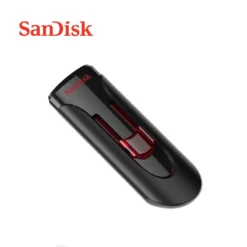
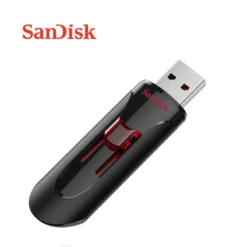
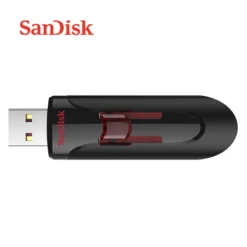
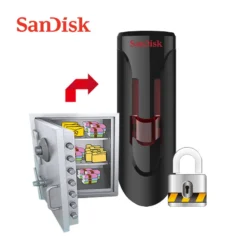
SanDisk CZ600 128GB USB 3.0 Flash Drive – Ultra-Fast Retractable Stick
£14.88
| Delivery | 4–5 working days · Fully tracked |
| Returns | 30 Day Returns |
| Warranty | 12-Month Warranty |
| Payment | Airwallex · PayPal · Klarna |
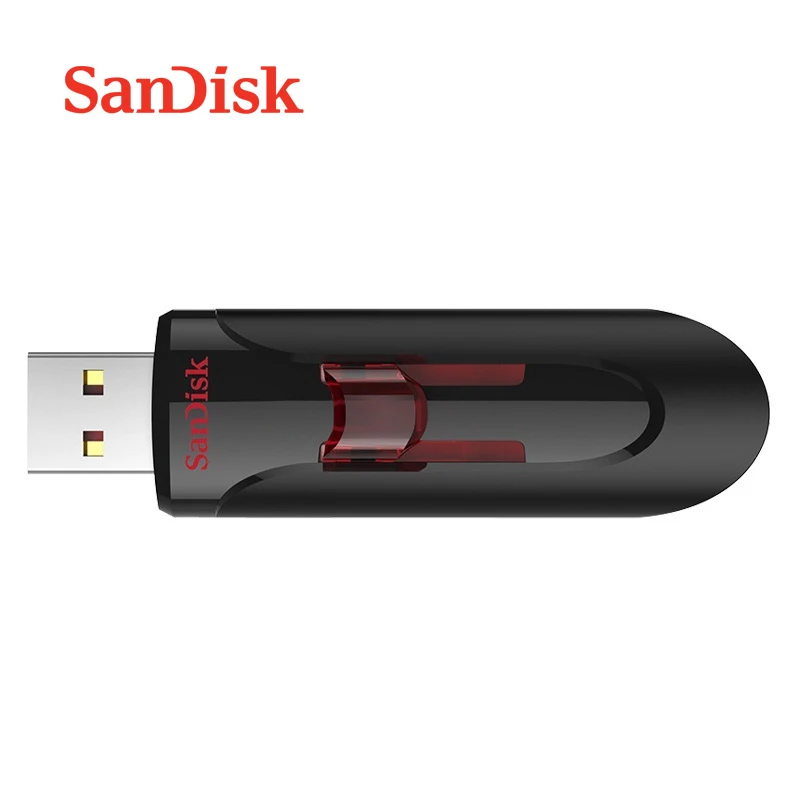
The SanDisk Cruzer Glide 3.0 128GB USB flash drive — SDCZ600-128G-B35, reading at up to 100MB/s over USB 3.0 with a retractable connector that needs no cap, a keyring loop, and SanDisk’s password-protection software for encrypting private files while leaving the rest of the drive shareable.
- ✓ USB 3.0 · reads at up to 100MB/s — a 4GB film copies off in around a minute
- ✓ Password protection included — encrypt private files, keep the rest shareable
- ✓ Retractable connector · keyring loop · no cap to lose
- ✓ Works in USB 2.0 ports too · Windows, macOS and Linux · genuine SanDisk
The SanDisk CZ600 128GB USB 3.0 Flash Drive — SDCZ600-128G-B35, reading at up to 100MB/s over USB 3.0 with a retractable connector that needs no cap, a keyring loop, and SanDisk’s password-protection software for encrypting private files while leaving the rest of the drive shareable.
- ✓ USB 3.0 · reads at up to 100MB/s — a 4GB film copies off in around a minute
- ✓ Password protection included — encrypt private files, keep the rest shareable
- ✓ Retractable connector · keyring loop · no cap to lose
- ✓ Works in USB 2.0 ports too · Windows, macOS and Linux · genuine SanDisk
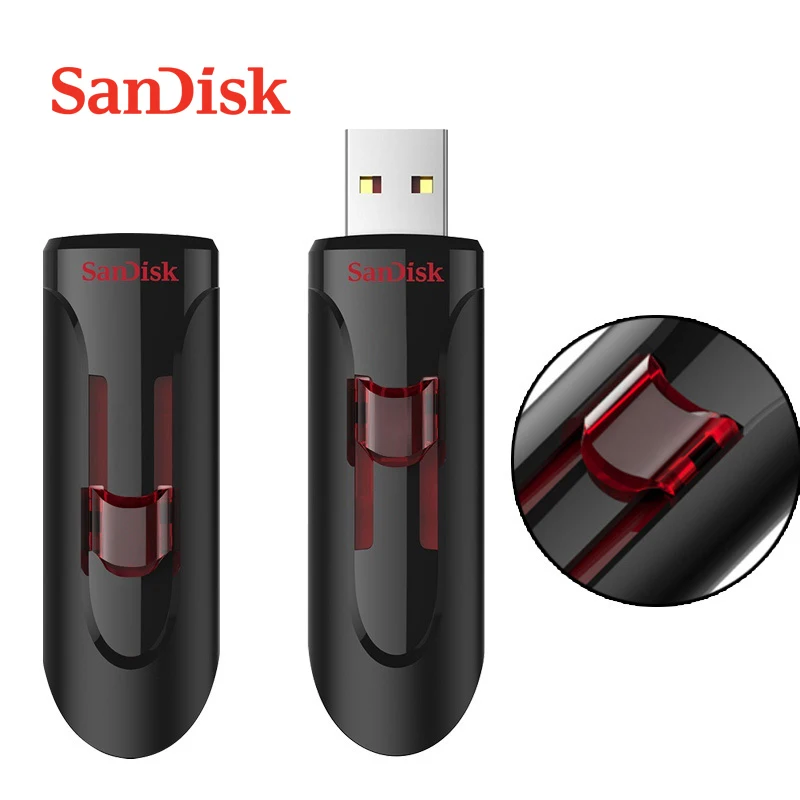
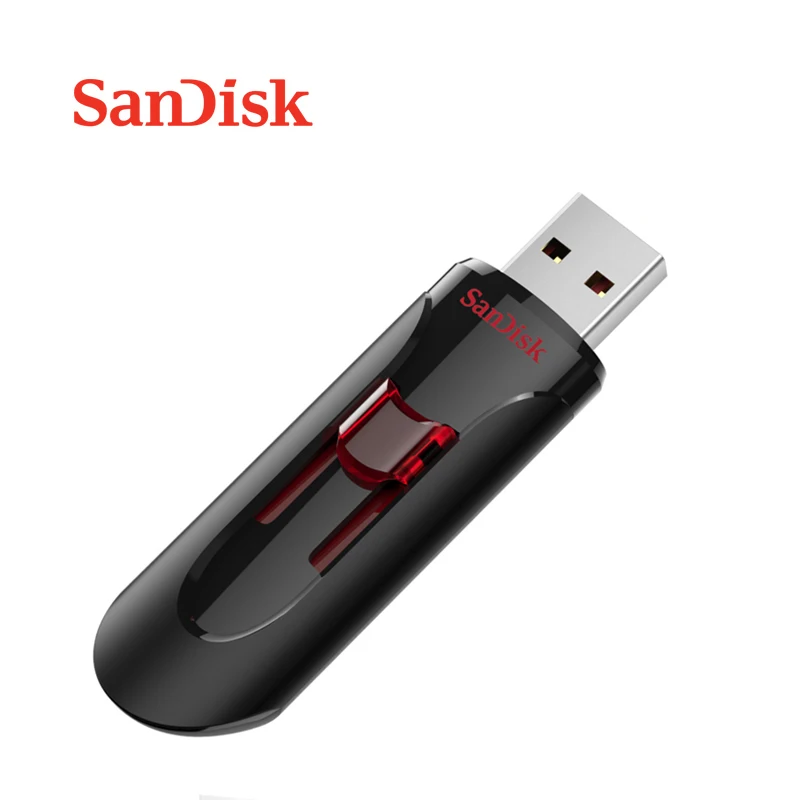
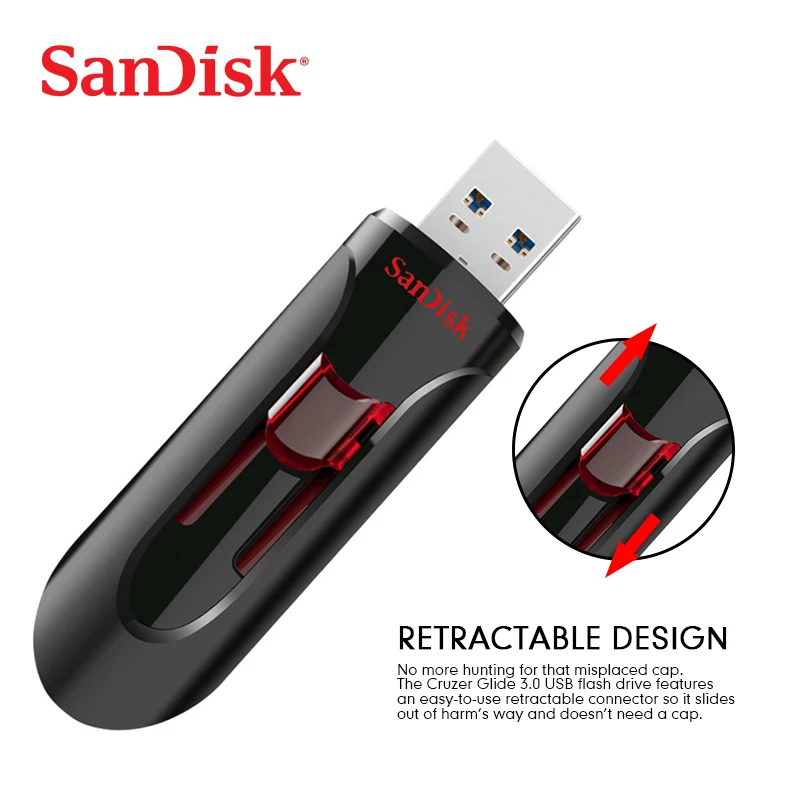
The SanDisk Cruzer Glide 3.0 — model CZ600 — is the drive to reach for when the cheapest USB 2.0 stick is not quite enough. Two things separate it from an entry-level drive. The first is speed: USB 3.0 reads at up to 100MB/s, which is roughly seven times what a USB 2.0 drive manages, and turns a transfer you would walk away from into one you wait through. The second is that SanDisk includes password-protection software, so you can encrypt a private folder on the drive while leaving the rest of it open to share — useful if the same stick carries both work documents and files you hand to other people. The connector retracts into the body with a thumb slider rather than using a cap, which is the design detail that means the drive still works in three years’ time, and there is a keyring loop moulded into the end. It plugs into any USB-A port, including USB 2.0 ones, and works on Windows, macOS and Linux without drivers.
USB 3.0 · Up to 100MB/s Read
What the Speed Actually Buys You
SanDisk publishes a read speed of up to 100MB/s for the Cruzer Glide 3.0. Put next to a USB 2.0 drive, which reads at around 15MB/s in practice, that is close to a sevenfold difference — a 4GB film that takes about four minutes to read off a USB 2.0 stick comes off this one in roughly a minute. It is worth being straight about the other half of the equation: SanDisk does not publish a write figure for this drive, and on flash drives in this class writing is always substantially slower than reading. Expect copying files onto the drive to take noticeably longer than copying them off. That asymmetry is normal for USB flash drives and is not a fault — it is a consequence of how NAND flash writes data. The practical reading of it is this: the Glide 3.0 is excellent for carrying files you write once and read often, such as a media library, an archive, a set of installers or a bootable image. It is good for backups. It is less suited to being a working drive you constantly write to. USB 3.0 also draws more power than 2.0, so on an unpowered hub or an older laptop with weak ports you may see the drive drop out — plug directly into the machine if that happens.
Password Protection Included
A Private Vault and a Shared Drive at Once
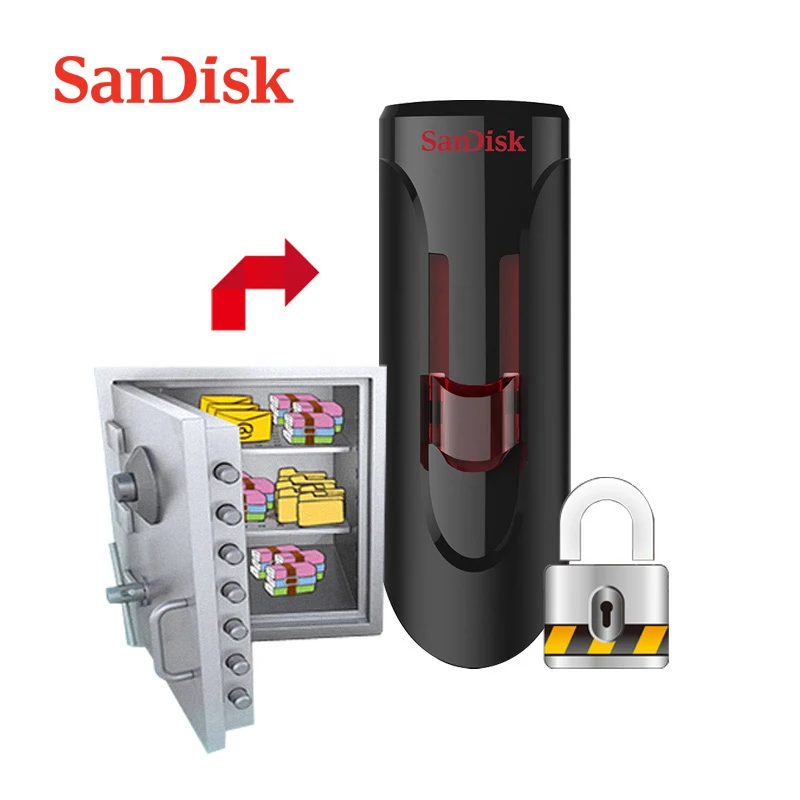
SanDisk supplies password-protection software with the Glide 3.0, and the way it works is more useful than simple whole-drive encryption. Rather than locking the entire stick, it creates an encrypted vault on the drive: files placed inside it are protected by a password and unreadable without it, while everything outside the vault stays plainly accessible. In practice that means one drive can carry a folder of contracts or personal documents alongside photos you are handing to a relative, without either getting in the way of the other. This is a genuine functional difference from a basic drive such as the Cruzer Blade, which has no protection of any kind. Two practical notes. First, the software runs on Windows and macOS — a Linux machine or a device such as a TV or car stereo will read the unprotected part of the drive but cannot open the vault. Second, SanDisk has changed the name of this software over the years, from SecureAccess to PrivateAccess, so the version referenced on your packaging depends on when the drive was produced; both do the same job and the current version is a free download from SanDisk’s support site. If you forget the password there is no recovery — that is the point of encryption, so store it somewhere safe.
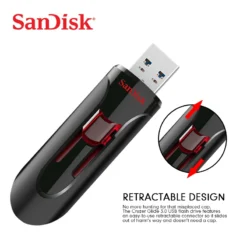
Retractable · Keyring Loop
Built Not to Get Damaged
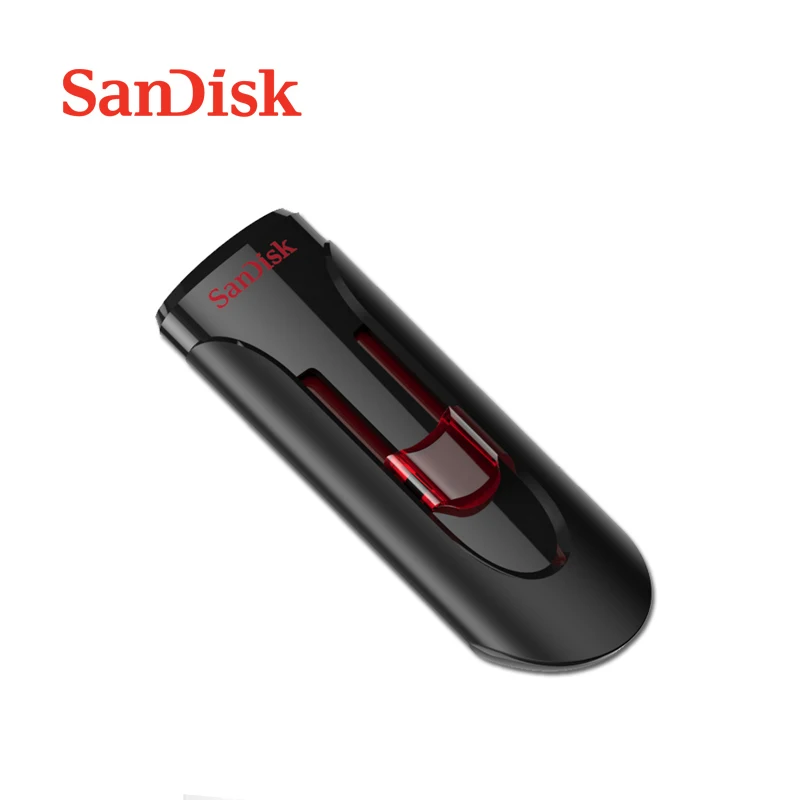
The single most common way a flash drive dies is a bent or dirty connector, and the single most common cause of that is a lost cap. The Cruzer Glide solves it structurally: the USB connector slides fully into the plastic body with a thumb tab, so when the drive is in a pocket or a bag the contacts are enclosed. There is nothing to remove and therefore nothing to lose. A keyring loop is moulded into the opposite end, which is a small thing until you want the drive attached to something rather than loose at the bottom of a rucksack. The body measures 60.2 × 20.8 × 11.2mm — longer than a minimal drive like the Cruzer Blade, because the retracting mechanism needs the space, so it protrudes further from a laptop and is more exposed to being knocked. If you leave a drive plugged into a laptop you carry around, that is worth weighing. There is no activity LED on this model, so you cannot tell by looking whether a write has finished; always eject through the operating system rather than pulling the drive out, particularly on large transfers where the write may still be flushing after the progress bar disappears. Rated for operation between 0°C and 35°C.
Right choice if you…
✔ Found a USB 2.0 drive too slow — up to 100MB/s read is roughly seven times quicker
✔ Carry private documents alongside files you share — the encrypted vault protects one without locking the other
✔ Keep losing caps — the connector retracts into the body, and there is a keyring loop
✔ Want a genuine SanDisk drive rather than an unbranded one of uncertain real capacity
Consider something else if…
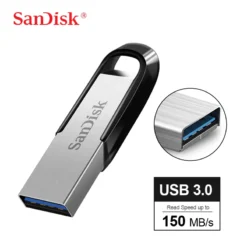
✖ You want the fastest drive in the range — the SanDisk Ultra Flair reads at up to 150MB/s in a metal body
✖ You only need cheap storage for documents — the USB 2.0 Cruzer Blade costs less and is smaller, if speed and encryption do not matter to you
✖ You need the encryption on Linux or a TV or car stereo — the password software runs on Windows and macOS only
Technical Specifications
| Brand | SanDisk |
| Model | Cruzer Glide 3.0 (CZ600) |
| MPN | SDCZ600-128G-B35 |
| Capacity | 128GB |
| Interface | USB 3.0 Type-A · backward compatible with USB 2.0 |
| Read Speed | Up to 100MB/s |
| Write Speed | Not published by SanDisk — lower than read |
| Security | SanDisk password-protection software · encrypted vault · Windows and macOS |
| Connector | Retractable — no cap |
| Keyring Loop | Yes |
| Indicator Light | None |
| Dimensions | 60.2 × 20.8 × 11.2mm |
| Operating Temperature | 0°C – 35°C |
| Compatibility | Windows · macOS · Linux · any USB-A host |
| Warranty | Manufacturer warranty (SanDisk) |
In the Box
SanDisk Cruzer Glide 3.0 128GB USB flash drive (SDCZ600-128G-B35)
Frequently Asked Questions
How much faster is this than a USB 2.0 drive?
Reading, roughly seven times faster — up to 100MB/s against about 15MB/s on a typical USB 2.0 stick. A 4GB film comes off this drive in around a minute rather than four. Writing is slower than reading on any flash drive, and SanDisk does not publish a write figure for this model, so copying onto the drive will take longer than copying off it. It is still substantially quicker than USB 2.0 in both directions.
How does the password protection work?
SanDisk’s software creates an encrypted vault on the drive. Files you put inside it need the password to open; everything outside stays freely accessible, so the same drive can carry private documents and files you share. The software runs on Windows and macOS and is a free download from SanDisk’s support site — note the name has changed over the years from SecureAccess to PrivateAccess depending on when the drive was made. There is no password recovery, so keep it somewhere safe.
Will it work in a USB 2.0 port?
Yes — it is backward compatible and works in any USB-A port. In a USB 2.0 port it runs at USB 2.0 speed rather than its own, so you get the drive’s full performance only on a USB 3.0 or newer port. Those are usually marked with a blue plastic insert or an SS symbol.
Why does it show around 119GB rather than 128GB?
Manufacturers count 1GB as 1,000,000,000 bytes while Windows counts it as 1,073,741,824. The same physical storage therefore displays as roughly 119GB, with a little more taken by the file system. Nothing is missing — this applies to every drive from every manufacturer.
How is this different from the Cruzer Blade?
The Cruzer Blade is USB 2.0, reads at about 15MB/s and has no encryption — it is the cheap, tiny option for documents. The Cruzer Glide 3.0 is USB 3.0 at up to 100MB/s and includes password protection, in a slightly larger body with a retractable connector and keyring loop. If you move large files or carry anything private, the Glide is the one worth paying for. If you just need somewhere to put coursework, the Blade does that for less.
Condition
Brand New — Retail Packaging
Warranty
Manufacturer warranty (SanDisk)
Delivery
4–5 Working Days · Fully Tracked
Also Available at maibo
Browse the full storage and memory range at maibo.
| Weight | 0.03 kg |
|---|---|
| Dimensions | 16 × 14 × 2 cm |
| Brand Name | SanDisk |
| Origin | CN(Origin) |
| Model Number | CZ600 |
| Product Type | Flash Disk, Encrypted |
| Package | Yes |
| Certification | CE |
| Interface Type | USB 3.0 |
| Material | Plastic |
| Encryption | Yes |
Only logged in customers who have purchased this product may leave a review.
Related products

microSD Cards
Storage & Memory
Compact Flash Memory
Compact Flash Memory
microSD Cards
Reviews
There are no reviews yet.