 WhatsApp

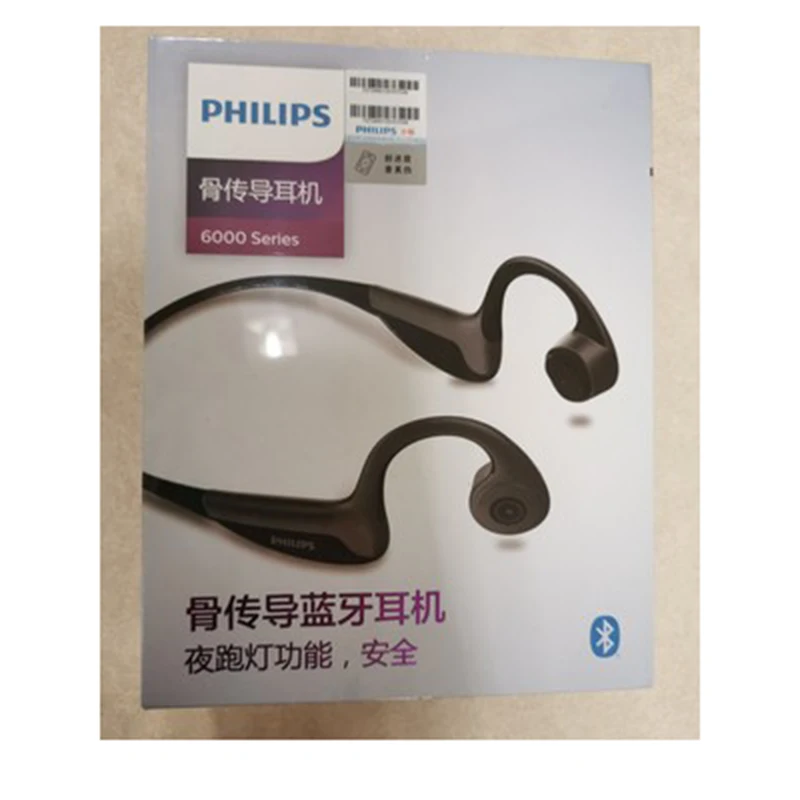

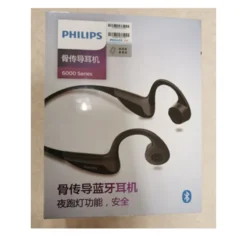
Philips TAN6605 Wireless headphone
£78.88
In stock
| Delivery | 4–5 working days · Fully tracked |
| Returns | 30 Day Returns |
| Warranty | 12-Month Warranty |
| Payment | Visa · Mastercard · Apple Pay · Klarna |
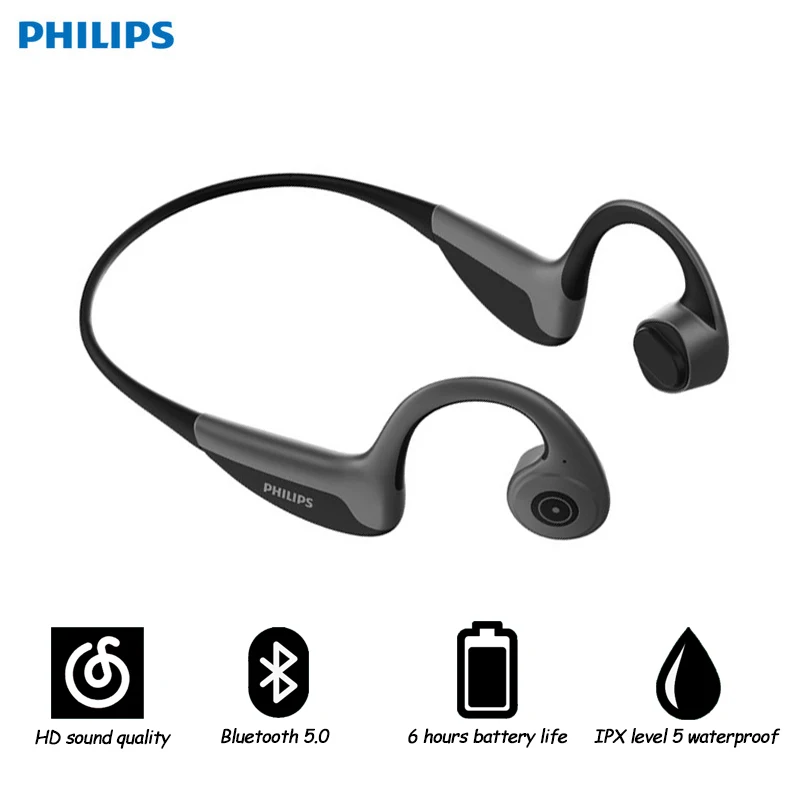
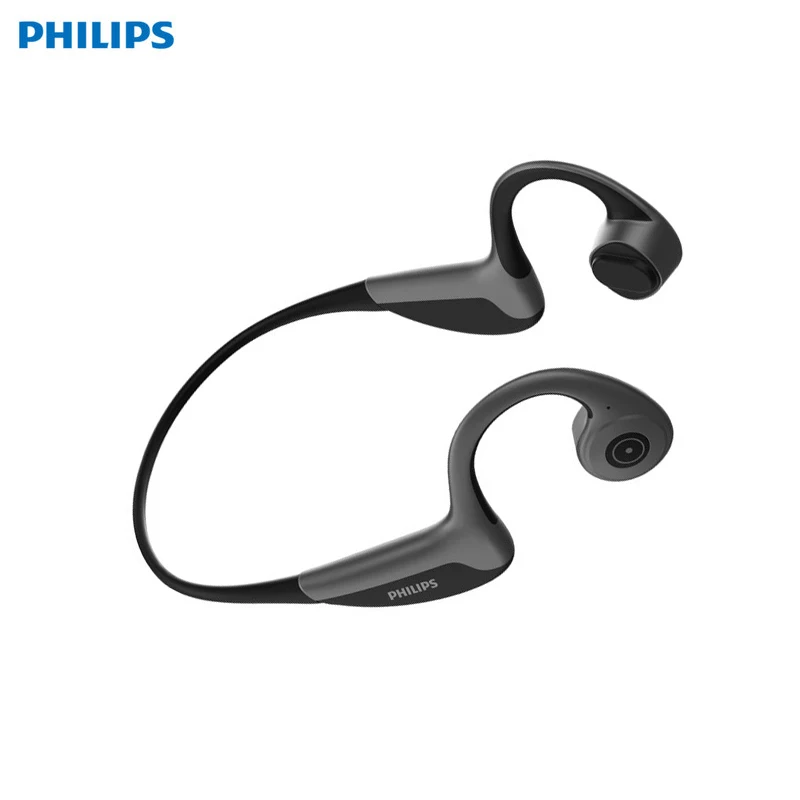
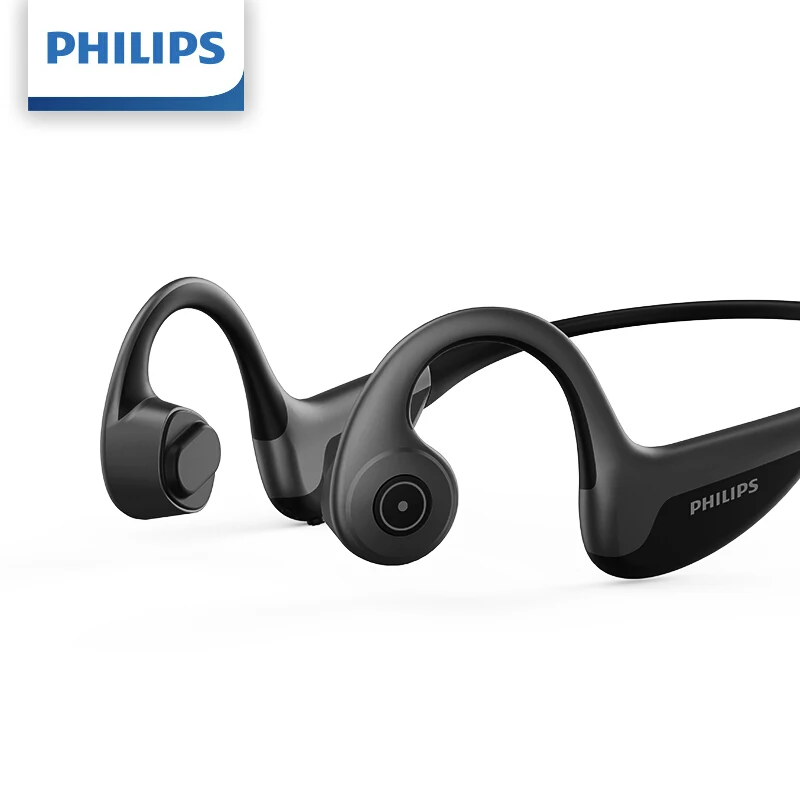
The Philips TAN6605 bone conduction wireless headphone — open-ear sport headphone that transmits sound through the cheekbones, leaving both ears completely open to the environment. Bluetooth 5.0, IPX5 sweat resistance, 6-hour battery, 36g. Black.
- ✓ Bone conduction — sound via cheekbones, both ears fully open to surroundings
- ✓ Bluetooth 5.0 · IPX5 sweat and splash resistant · 36g lightweight
- ✓ 6-hour battery · 10 days standby · 2-hour full charge
- ✓ Open-ear neckband design — safe for outdoor running, cycling and commuting
The Philips TAN6605 Wireless headphone — open-ear sport headphone that transmits sound through the cheekbones, leaving both ears completely open to the environment. Bluetooth 5.0, IPX5 sweat resistance, 6-hour battery, 36g. Black.
- ✓ Bone conduction — sound via cheekbones, both ears fully open to surroundings
- ✓ Bluetooth 5.0 · IPX5 sweat and splash resistant · 36g lightweight
- ✓ 6-hour battery · 10 days standby · 2-hour full charge
- ✓ Open-ear neckband design — safe for outdoor running, cycling and commuting
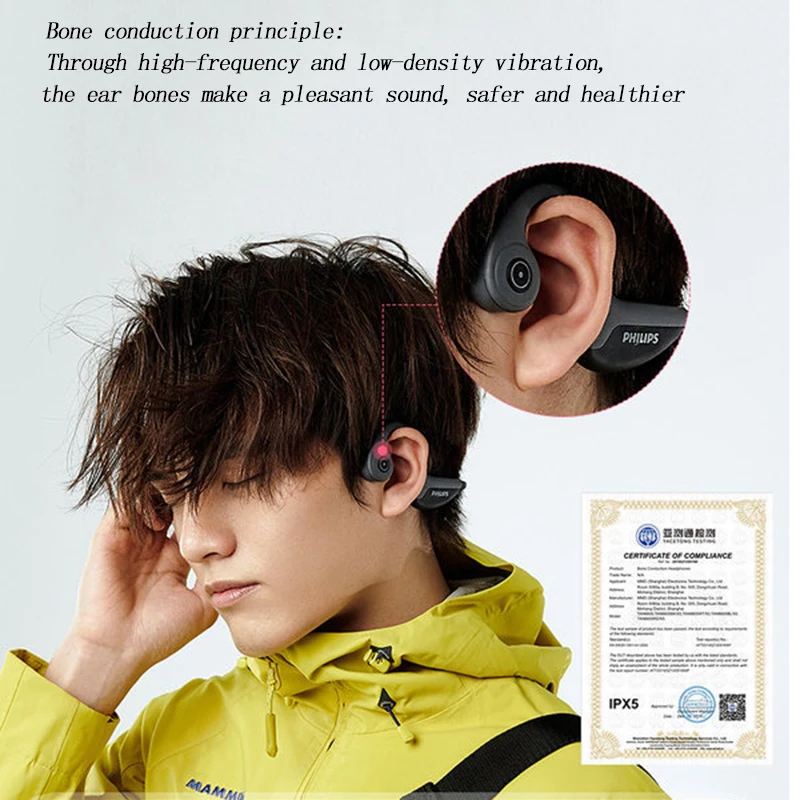
The Philips TAN6605 is a bone conduction wireless sport headphone — a fundamentally different category from conventional in-ear, on-ear or over-ear headphones. Rather than directing sound into or onto the ear, bone conduction transducers rest against the cheekbones in front of each ear and vibrate the skull, transmitting sound directly to the cochlea through bone rather than through air and the eardrum. The result is that both ears remain completely unobstructed — no earbud in the canal, no pad covering the ear — and the user can hear everything in their environment at full volume while simultaneously hearing audio from the headphone. For outdoor runners, cyclists and commuters who need situational awareness — hearing traffic, other pedestrians, verbal warnings — bone conduction is the only headphone technology that allows music or call audio without compromising the ability to hear what is happening around them. The TAN6605 uses Bluetooth 5.0 for stable wireless connection, weighs 36g in a neckband form factor that loops over the ears and sits at the back of the skull, carries IPX5 sweat and splash resistance for sport use, and delivers 6 hours of battery life from a 2-hour charge.
Bone Conduction Technology
How It Works and Why It Matters
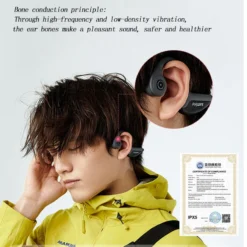
Conventional headphones and earphones work by moving air — a speaker driver creates pressure waves in the air column inside or around the ear, which cause the eardrum to vibrate, which the auditory system interprets as sound. Bone conduction bypasses this pathway entirely. The transducers in the TAN6605 are pressed against the cheekbones — the zygomatic bones on each side of the face, just in front of the ear. When the transducers vibrate, they cause the skull bones themselves to vibrate at audio frequencies, and those vibrations travel directly to the cochlea — the inner ear’s fluid-filled organ where sound is converted to nerve signals — without passing through the eardrum at all. The cochlea receives these vibrations as sound in the same way it would receive airborne sound that has travelled through the eardrum. Because nothing is placed in or over the ear canal, the ear canal remains open. Ambient sound — traffic, voices, the environment — enters the ear canal and reaches the eardrum normally. The user hears both the ambient environment and the bone conduction audio simultaneously, without one masking the other at normal listening levels. This is why bone conduction is specifically suited to outdoor sport — it provides audio without creating the sensory isolation that makes conventional headphones hazardous when cycling or running near traffic.
IPX5 · 36g · Neckband Fit
Built for Sport Wear
The TAN6605 weighs 36g — lighter than most over-ear gaming headsets and comparable to the lightest running earphones. The neckband form factor wraps a flexible frame around the back of the skull, with the transducer pads positioned in front of each ear by the arms of the frame. The frame loops over the tops of the ears to hold the transducers in consistent contact with the cheekbones during movement — running, head turns and moderate activity do not dislodge the fit. The IPX5 rating covers protection against low-pressure water jets from any direction, which in practice means sweat from intense exercise, rain, and incidental splash are within the rated protection range. IPX5 does not cover submersion — swimming is outside the rated protection. The combination of 36g weight, open-ear design, and secure neckband fit produces a wearing experience that many users who have found conventional sport earphones uncomfortable — due to canal pressure, heat buildup under ear pads, or the anxiety of reduced environmental awareness — find significantly more compatible with extended outdoor use. The fit leaves the ears thermally neutral, no canal pressure, and no perception of wearing a heavy device on the head.
BT 5.0 · 6hr Battery
Wireless for a Full Training Session
Bluetooth 5.0 provides a stable wireless connection with improved range and reduced power consumption compared to Bluetooth 4.x. For sport use — where the phone is typically in a pocket, armband or backpack within a few metres of the headphone — BT 5.0’s improved signal stability means fewer audio dropouts during movement compared to older Bluetooth versions, particularly when the body is between the headphone and the phone. The 6-hour battery life covers most training sessions, daily commutes and casual listening use without mid-day charging. The 10-day standby figure is relevant for users who leave the headphone on between uses — it can be left switched on without charging for extended periods without the battery depleting. The 2-hour full charge time is standard for this battery capacity. The headphone pairs to any Bluetooth-capable device — smartphone, tablet, laptop — and operates as a standard Bluetooth audio device for music playback, podcasts and call audio. The bone conduction transducers also carry the microphone function, capturing the speaker’s voice through bone vibration from the jaw — which makes calls surprisingly clear even in windy outdoor environments where air-based microphones struggle with wind noise.
Right choice if you…
✔ Run or cycle outdoors and need to hear traffic — open-ear design maintains full situational awareness while you listen
✔ Find earbuds uncomfortable during long wear — nothing enters the ear canal, no pressure, no heat buildup
✔ Need a sweat-resistant wireless headphone for gym or outdoor training — IPX5 rated
✔ Have hearing considerations in the outer or middle ear — bone conduction bypasses the eardrum entirely
Consider something else if…
✖ You want deep bass or high audio fidelity — bone conduction’s open design cannot produce the low-frequency response of closed in-ear or over-ear headphones; bass in particular is significantly lighter
✖ You want to use headphones in a quiet shared space — bone conduction leaks audio at moderate volumes; people nearby will hear what you’re listening to
✖ You want noise isolation or noise cancellation — open-ear design provides none; all ambient sound is fully audible at all times
Technical Specifications
| Brand | Philips |
| Model | TAN6605 |
| MPN | TAN6605 |
| Colour | Black |
| Type | Bone conduction · open-ear · neckband |
| Wireless | Bluetooth 5.0 |
| Water Resistance | IPX5 — sweat and splash resistant |
| Battery Life | 6 hours music / talk time |
| Standby | Up to 10 days |
| Charge Time | ~2 hours (full charge) |
| Weight | 36g |
| Microphone | Yes — bone-conducting mic for calls |
| Warranty | Manufacturer warranty (Philips) |
In the Box
Philips TAN6605 bone conduction wireless headphone — Black
Charging cable
Frequently Asked Questions
Can I hear traffic and other sounds while using these?
Yes — this is the core purpose of bone conduction. Nothing covers or enters the ear canal, so all ambient sound reaches your eardrums normally. You hear traffic, voices and your environment at full volume alongside the audio from the headphone. There is no mode that reduces ambient sound — the open-ear design is always fully aware of surroundings.
Does bone conduction sound as good as regular headphones?
Not for audiophile listening. Bone conduction produces lighter bass, less stereo separation and less overall isolation than closed in-ear or over-ear headphones. For music quality alone, a conventional earphone at the same price performs better. Bone conduction’s advantage is situational awareness — it is the right choice when you cannot or do not want to block your ears, not when audio quality is the primary concern.
Will people nearby hear my audio?
Yes at moderate volumes. Bone conduction transducers vibrate against the face, and some of that vibration is transmitted as airborne sound — the headphone leaks audio in a way that conventional closed earphones do not. In a quiet room or quiet office, people nearby will hear what you are listening to at normal listening volume. These are suited to outdoor sport and commuting in ambient noise, not quiet shared spaces.
Are these suitable for phone calls?
Yes. The built-in bone-conducting microphone captures voice through jaw vibration rather than airborne sound, which gives it a degree of natural wind noise rejection during outdoor use. Call quality is generally clear in moderate environments. In very windy conditions, some wind noise may be captured depending on microphone position relative to the wind direction.
Condition
Brand New — Retail Packaging
Warranty
Manufacturer warranty (Philips)
Delivery
4–5 Working Days · Fully Tracked
Also Available at maibo
Browse the full headphones and audio range at maibo.
| Weight | 0.15 kg |
|---|---|
| Dimensions | 20 × 15 × 10 cm |
| Brand Name | Philips |
| Vocalism Principle | Hybrid technology |
| Control Button | Yes |
| Active Noise-Cancellation | No |
| Communication | wireless |
| Volume Control | Yes |
| Style | Ear Hook |
| Wireless Type | bluetooth |
| Is wireless | Yes |
| Line Length | Nonem |
| Support APP | No |
| Function | For Mobile Phone, Sport, Common Headphone |
| Connectors | None |
| Model Number | TAN6605BK/93 |
| Support Memory Card | No |
| Resistance | 32ΩΩ |
| Waterproof | Yes |
| With Microphone | Yes |
| Product Model | TAN6605BK/93 |
| Talk Time | 6 Hours |
| Music Playing Time | 6 Hours |
| Bluetooth Version | 5.0 |
Only logged in customers who have purchased this product may leave a review.
Related products
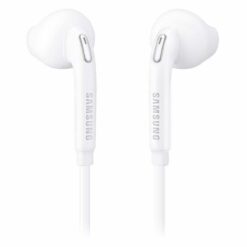
Wired Earphones


Reviews
There are no reviews yet.