 WhatsApp

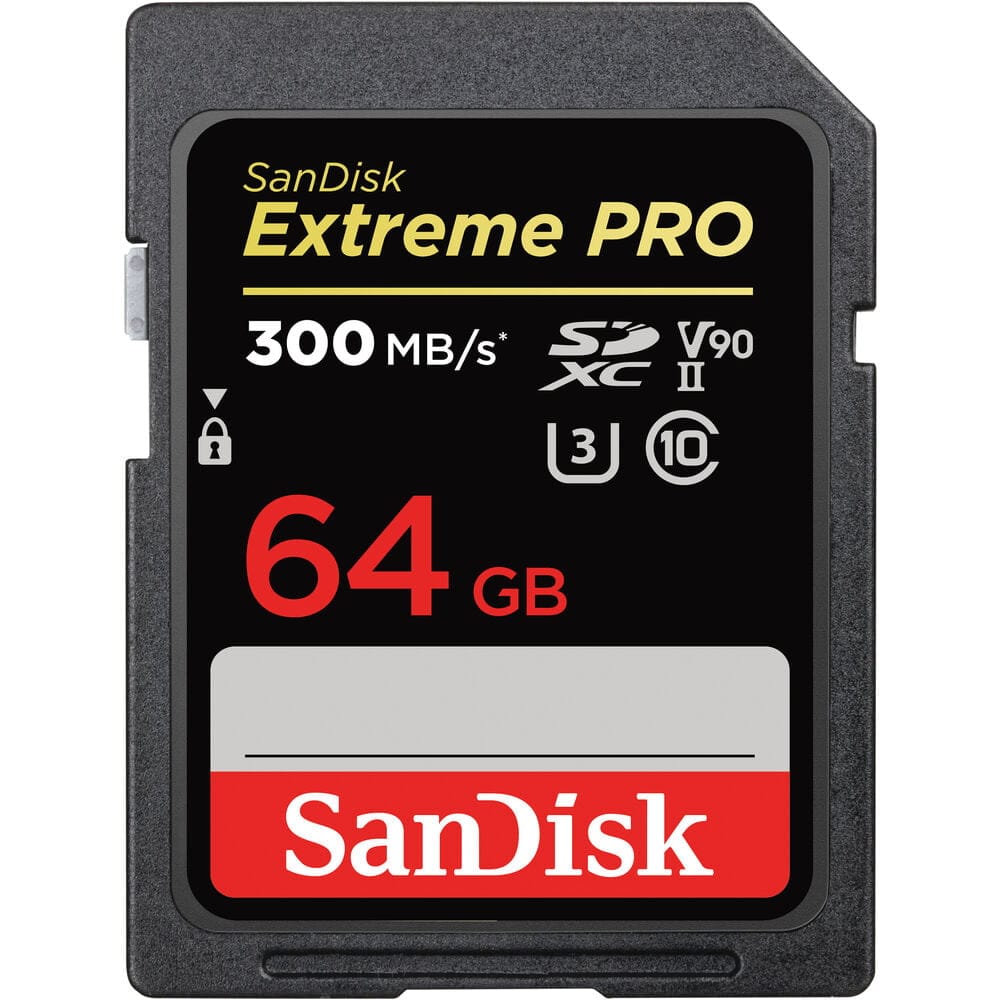
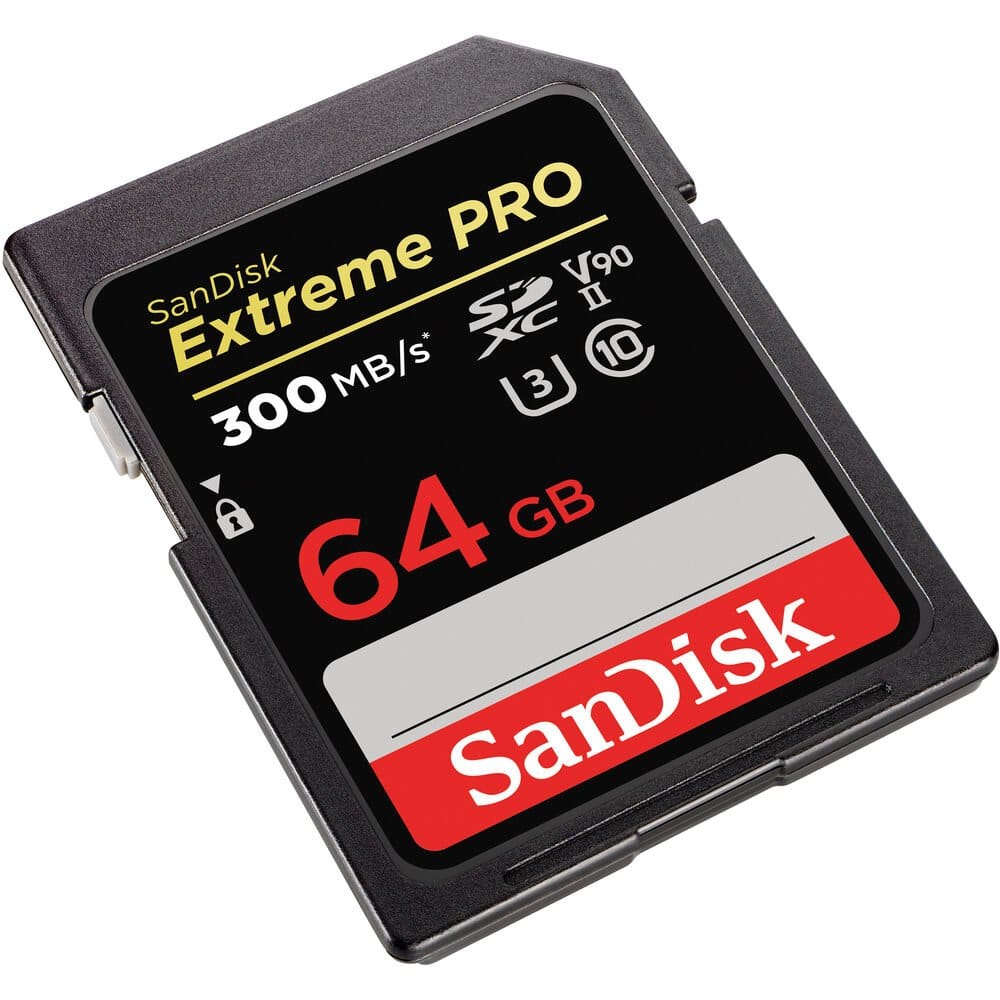
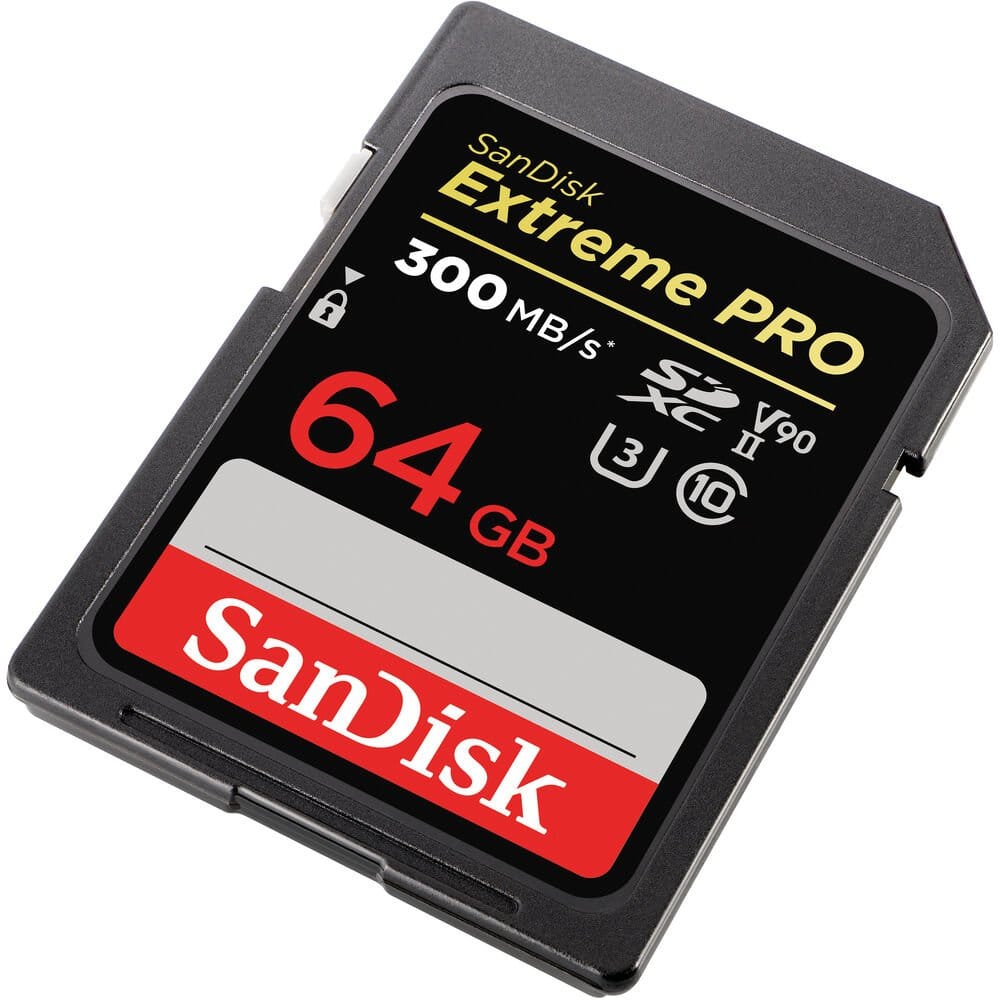
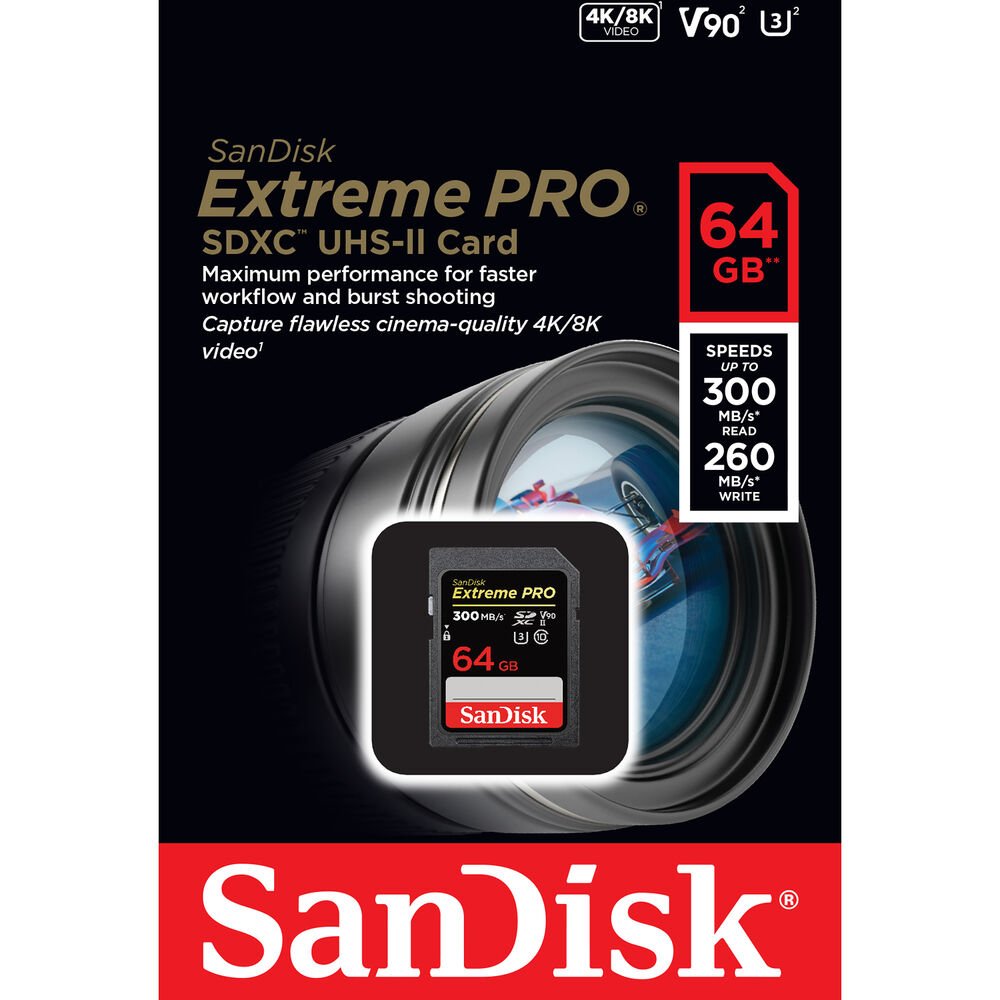

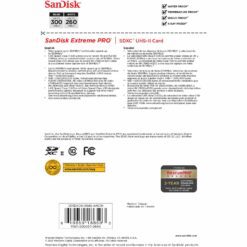
SanDisk Extreme PRO 64GB UHS-II SDXC Memory Card – 300 MB/s
£109.99
| Delivery | 4–5 working days · Fully tracked |
| Returns | 30 Day Returns |
| Warranty | 12-Month Warranty |
| Payment | Visa · Mastercard · Apple Pay · Klarna |
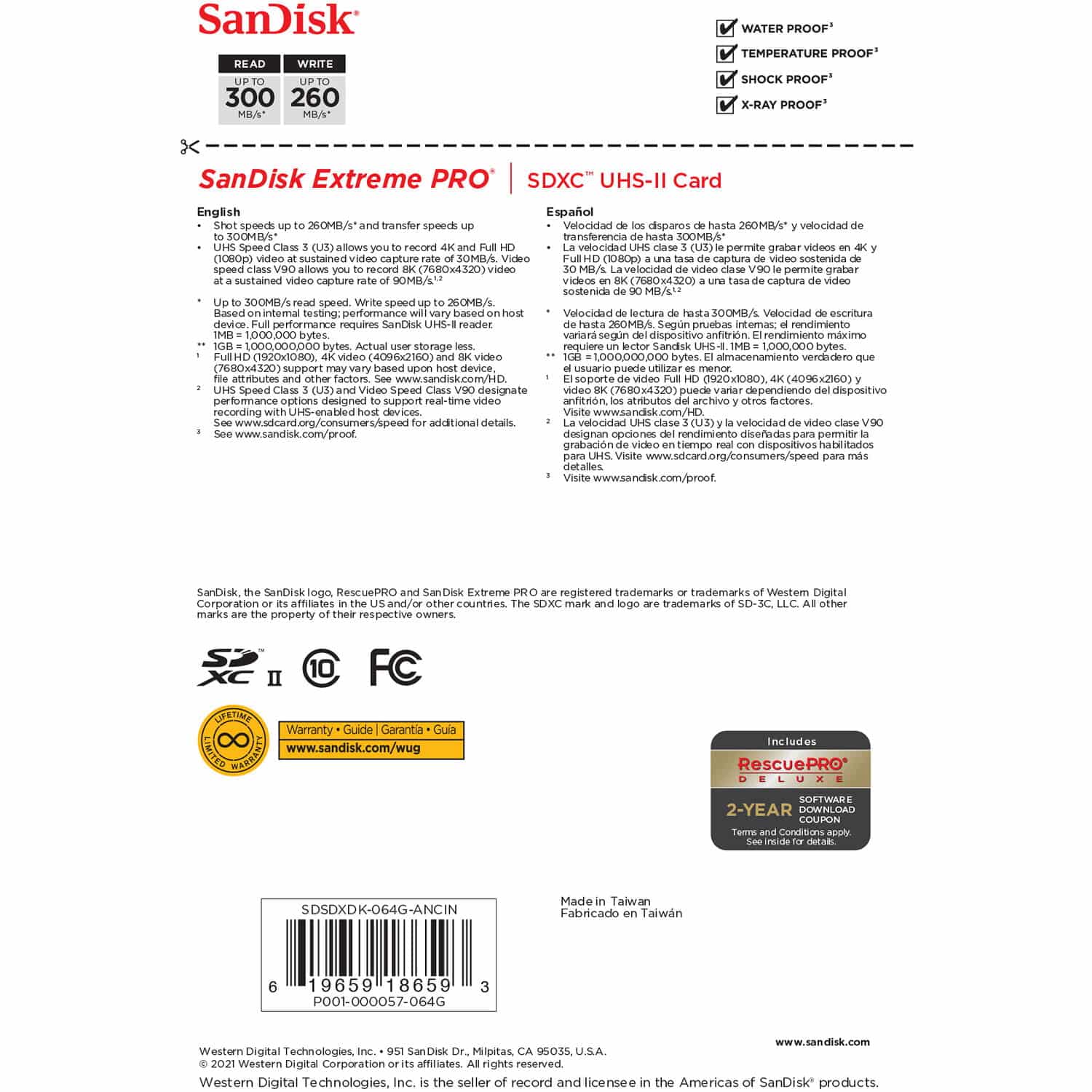
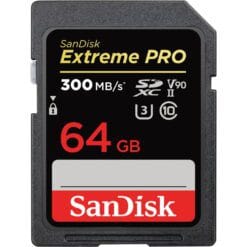
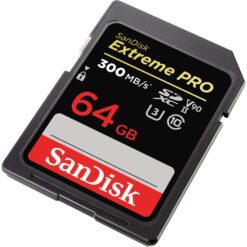
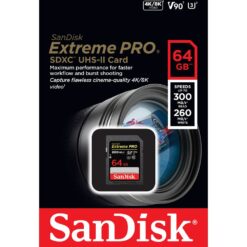
The SanDisk Extreme PRO 64GB SDXC UHS-II memory card — 300MB/s read, 260MB/s write, and a V90 rating guaranteeing sustained writes never drop below 90MB/s. Built for 8K and cinema-quality 4K capture, continuous RAW burst shooting, and fast offload in post. Shock, X-ray, water and temperature proof.
- ✓ 300MB/s read · 260MB/s write over UHS-II — offload a full card in minutes
- ✓ V90 rated — writes guaranteed never to fall below 90MB/s, for 8K and high-bitrate 4K
- ✓ Continuous RAW burst shooting without the buffer stalling
- ✓ Shock, X-ray, water and temperature proof · RescuePRO data recovery software
The SanDisk Extreme PRO 64GB UHS-II SDXC Memory Card – 300 MB/s read, 260MB/s write, and a V90 rating guaranteeing sustained writes never drop below 90MB/s. Built for 8K and cinema-quality 4K capture, continuous RAW burst shooting, and fast offload in post. Shock, X-ray, water and temperature proof.
- ✓ 300MB/s read · 260MB/s write over UHS-II — offload a full card in minutes
- ✓ V90 rated — writes guaranteed never to fall below 90MB/s, for 8K and high-bitrate 4K
- ✓ Continuous RAW burst shooting without the buffer stalling
- ✓ Shock, X-ray, water and temperature proof · RescuePRO data recovery software
The SanDisk Extreme PRO UHS-II sits at the top of SanDisk’s SD card range, and it exists for one reason: to remove the memory card as the bottleneck in a professional workflow. Two numbers define it. The first is 300MB/s read, which is what turns offloading a shoot from a coffee break into a couple of minutes. The second — and the one that actually matters while you are shooting — is V90: a guarantee that sustained write speed never drops below 90MB/s, no matter how long the recording runs or how full the card gets. That guarantee is the difference between a camera that records 8K continuously and one that stops mid-take with a buffer error. The card reaches these speeds over UHS-II, which uses a second row of contacts on the back that only UHS-II cameras and readers can use — worth checking your equipment supports it before buying, because in a UHS-I camera this card works perfectly but runs at UHS-I speed. Built to survive what professional gear gets put through: shockproof, waterproof, X-ray proof and rated across a wide temperature range.
V90 · The Number That Matters
Why a Minimum Beats a Maximum
Card marketing leads with peak speeds, but video recording does not care about peaks. A camera writing 8K or high-bitrate 4K produces a constant, unrelenting stream of data, and if the card’s write speed dips below what the camera is producing — even briefly — the buffer fills and the recording stops. What matters is therefore the floor, not the ceiling. V90 is the Video Speed Class rating that guarantees a sustained minimum write of 90MB/s, and it is the highest class in the standard. A card advertising 260MB/s peak write but rated only V30 guarantees just 30MB/s sustained, which is fine for standard 4K and will fail on high-bitrate formats. This card carries both: 260MB/s peak for burst photography, and a hard 90MB/s floor for continuous recording. In practice that means 8K, cinema-grade 4K, high frame rate slow motion and All-I codecs record without dropped frames or interrupted takes. U3 (UHS Speed Class 3) appears on the card alongside V90 and guarantees 30MB/s — it is the older equivalent standard, kept for cameras whose firmware reads U3 rather than V-class ratings. Both refer to the same underlying capability.
UHS-II · Check Your Camera First
The Second Row of Contacts
Turn this card over and you will see two rows of gold contacts rather than one. The original row is the standard SD interface; the second row of eight additional contacts carries the UHS-II four-lane bus, and it is what allows 300MB/s. Only cameras and card readers built for UHS-II have the corresponding second row of pins to use it. This is the single most important thing to check before buying, and the most common cause of disappointment with UHS-II cards. In a UHS-I camera the card is fully compatible and works without any problem — the extra contacts simply go unused, and the card operates at whatever speed that camera’s UHS-I interface supports, typically around 90 to 100MB/s. Nothing breaks and no data is at risk; you just do not get the speed you paid for. The same applies to card readers: plugging this card into a UHS-I reader caps your offload speed regardless of how fast the card is. If you are buying this card for the 300MB/s, budget for a UHS-II reader as well, or the bottleneck simply moves from the card to the reader. Check your camera’s manual for UHS-II support — most professional mirrorless and DSLR bodies from the last several years have at least one UHS-II slot, and some have one UHS-II and one UHS-I.
Burst Shooting · Durability · Recovery
Built for the Job, Built to Survive It
For stills photographers the 260MB/s write speed changes how long you can hold the shutter down. Every camera has a buffer that absorbs images faster than the card can take them; once it fills, the frame rate collapses to whatever the card can sustain. A faster card empties that buffer more quickly, which means longer continuous RAW bursts and a shorter wait before the camera is responsive again — the difference between capturing a sequence and missing the end of it. At 64GB this card suits a working card you offload regularly rather than a whole-trip archive; that is deliberate on many professionals’ part, since spreading a shoot across several smaller cards limits what a single failure can cost you. Durability is rated across four categories: shockproof against drops and impact, waterproof, X-ray proof for airport security screening, and operational across a wide temperature range covering both freezing outdoor conditions and heat inside a car or bag in summer. SanDisk includes RescuePRO data recovery software, which can retrieve images from a card that has been accidentally formatted or has become unreadable — worth registering when you buy the card rather than discovering it exists after something has gone wrong.
Right choice if you…
✔ Record 8K or high-bitrate 4K — V90 guarantees the sustained write floor those formats need
✔ Have a camera with a UHS-II slot and want to use its full speed
✔ Shoot long continuous RAW bursts — 260MB/s clears the camera buffer faster
✔ Offload large volumes of footage regularly — 300MB/s read turns a long wait into a short one
Consider something else if…
✖ Your camera has only UHS-I slots — the card works, but at UHS-I speed; a good UHS-I V30 card costs considerably less and performs identically in that body
✖ You shoot stills only at moderate burst rates — V30 or V60 covers that comfortably and the V90 premium buys speed you will not reach
✖ You need a card for a phone, drone or action camera — those take microSD; see the Samsung EVO Plus microSD range
Technical Specifications
| Brand | SanDisk |
| Series | Extreme PRO SDXC UHS-II |
| Capacity | 64GB |
| Format | SDXC |
| Bus Interface | UHS-II · four-lane · second contact row |
| Read Speed | Up to 300MB/s |
| Write Speed | Up to 260MB/s |
| Minimum Sustained Write | 90MB/s guaranteed (V90) |
| Speed Classes | V90 · U3 · Class 10 |
| Video Support | 8K · cinema-quality 4K · Full HD · 3D |
| Backward Compatibility | Works in UHS-I and standard SD hosts at reduced speed |
| Durability | Shockproof · waterproof · X-ray proof · temperature proof |
| Software | RescuePRO data recovery (download) |
| Warranty | Manufacturer warranty (SanDisk) |
In the Box
SanDisk Extreme PRO 64GB SDXC UHS-II memory card
Frequently Asked Questions
Will I get 300MB/s in my camera?
Only if your camera has a UHS-II slot. UHS-II speed comes from a second row of contacts on the back of the card, and only UHS-II bodies have the pins to read them. In a UHS-I camera the card works perfectly and safely, but runs at that camera’s UHS-I speed, typically around 90 to 100MB/s. Check your camera manual for UHS-II support before buying — this is the most common reason people feel a UHS-II card underperformed.
Do I need a special card reader?
To offload at 300MB/s, yes — a UHS-II reader. The card fits and works in any standard SD reader, but a UHS-I reader caps the transfer at its own speed regardless of the card. If the reason you are buying this card is fast offloading, budget for a UHS-II reader too, otherwise the bottleneck simply moves from the card to the reader.
What does V90 mean, and is it different from U3?
V90 guarantees the card never writes slower than 90MB/s sustained — the floor, not the peak, which is what continuous video recording depends on. U3 is the older equivalent standard and guarantees 30MB/s. This card carries both markings because cameras read one or the other depending on firmware age. For 8K and high-bitrate 4K the V90 rating is what you need; V30 cards, despite fast peak figures, only guarantee 30MB/s and can stall on those formats.
Is 64GB enough for 4K or 8K video?
It depends entirely on your codec and bitrate — high-bitrate 8K fills a 64GB card quickly, while compressed 4K lasts considerably longer. Many professionals prefer several 64GB cards over one large one, because a single card failure or loss then costs you part of a shoot rather than all of it. Check your camera’s recording time estimate for the format you use.
Can it survive airport X-ray machines?
Yes — the card is rated X-ray proof, so security screening will not damage it or your images. It is also shockproof, waterproof and rated for a wide temperature range, which is why these cards are standard in professional kit bags that travel.
Condition
Brand New — Retail Packaging
Warranty
Manufacturer warranty (SanDisk)
Delivery
4–5 Working Days · Fully Tracked
Also Available at maibo
Browse the full memory card range at maibo.
Only logged in customers who have purchased this product may leave a review.
Related products
microSD Cards
Compact Flash Memory
Storage & Memory
Storage & Memory
SanDisk CZ50 USB 2.0 Flash Drive – 128GB Pen Drive – Black/Red
Reviews
There are no reviews yet.