 WhatsApp

Headphones
Why Wired Headphones Are Making a Comeback — And Why It Makes Complete Sense
Why Wired Headphones Are
Making a Comeback — And Why It Makes Complete Sense
Wired headphone revenue jumped 20% in the first weeks of 2026 after five straight years of decline. The industry called it a nostalgia blip. We’ve been selling wired earphones for 20 years — and from where we sit, this isn’t nostalgia at all. It’s rational.
Source: Circana
2024 value
We saw this coming
For five years, every audio industry analyst told the same story: wired headphones are dead. Wireless is the future. The headphone jack is gone. Move on. And for a while, the sales data backed them up — wired revenue dropped consistently from 2019 through 2024, bottoming out with a $42 million decline in that final year alone.
Then something shifted. In the second half of 2025, wired headphone sales started climbing — quietly at first, then unmistakably. By the first six weeks of 2026, according to research firm Circana, wired revenue was up 20% year-on-year. Not a blip. Not noise. A reversal.
Most coverage treated this as a fashion story — Gen Z, Y2K aesthetics, celebrities with wired earphones draped around their necks as accessories. That’s real, and we’ll cover it. But it’s the smaller part of the explanation. The larger part is economic, practical, and entirely predictable if you’d been watching the wired market closely rather than writing its obituary.
The Economics — When £200 Earbuds Need Replacing Every Two Years
The planned obsolescence built into wireless earbuds has finally started registering with buyers as a cost, not just an inconvenience. A £200 pair of true wireless earbuds has a lithium-ion battery with a finite cycle life. After 18–24 months of daily use, the battery capacity has degraded enough that what once gave you 6 hours of listening now gives you 3. The earbuds aren’t broken — they’re just half as useful. And in most cases, the battery isn’t replaceable.
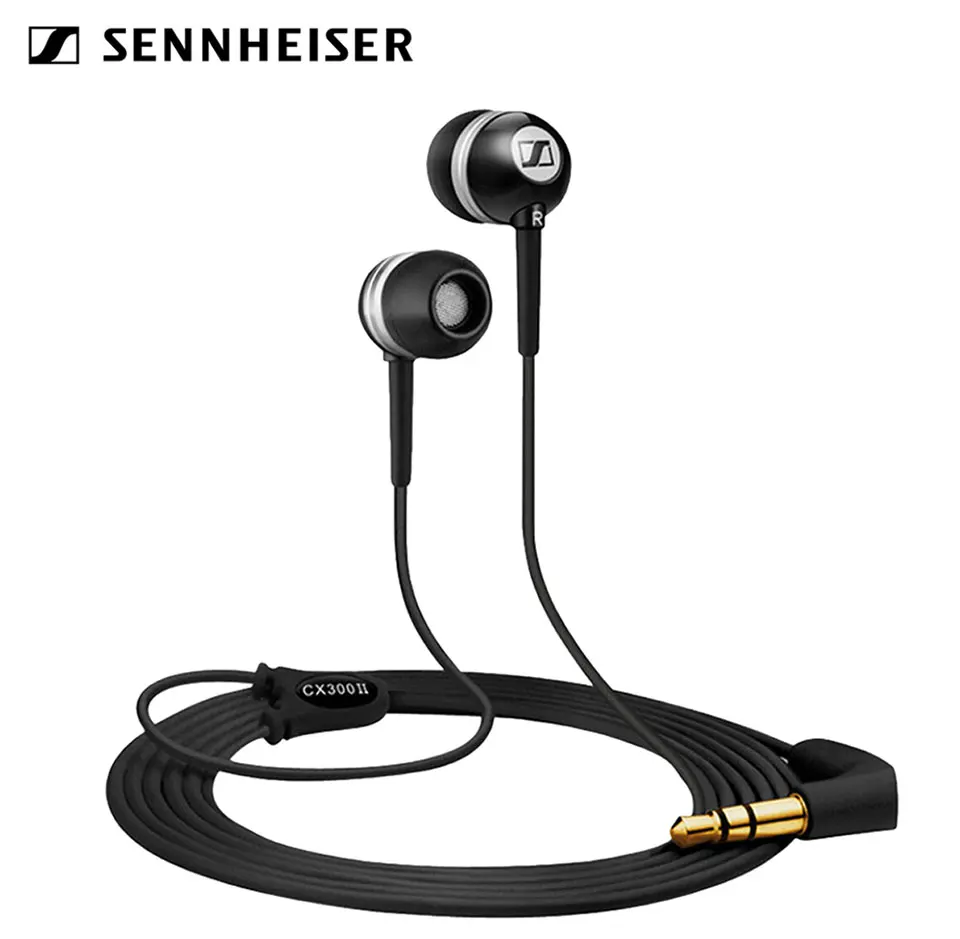
Circana’s data puts the average selling price of wired headphones in 2025 at around £13. The average wireless pair: £99. For a buyer who’s replaced their wireless earbuds twice in four years — spending £400 total — a £25 pair of Sennheiser wired earphones that will last a decade without degradation isn’t a compromise. It’s a better deal.
Inflation has sharpened this calculation significantly. Gen Z and younger millennials — the demographic most associated with the wired comeback — are also the demographic most squeezed by housing costs, energy prices, and the general cost of living increases of the last three years. When necessities absorb more income, the logic of the £200 wireless upgrade loses its persuasiveness fast. Wired earphones aren’t a downgrade. They’re a rational reallocation.
“A £25 wired earphone that lasts a decade is not an inferior product to a £200 wireless earbud you’ll replace twice. The industry spent years convincing buyers otherwise. The buyers have stopped believing it.”
— Halil Ibrahim Tutuncu, Maibo
The Technical Reality — What Wireless Still Can’t Match
The audio quality gap between wired and wireless has narrowed considerably. Premium wireless headphones from Sony, Bose, and Sennheiser now deliver exceptional sound. That’s not the argument. The argument is about the use cases where wired remains technically superior — and those use cases haven’t disappeared.
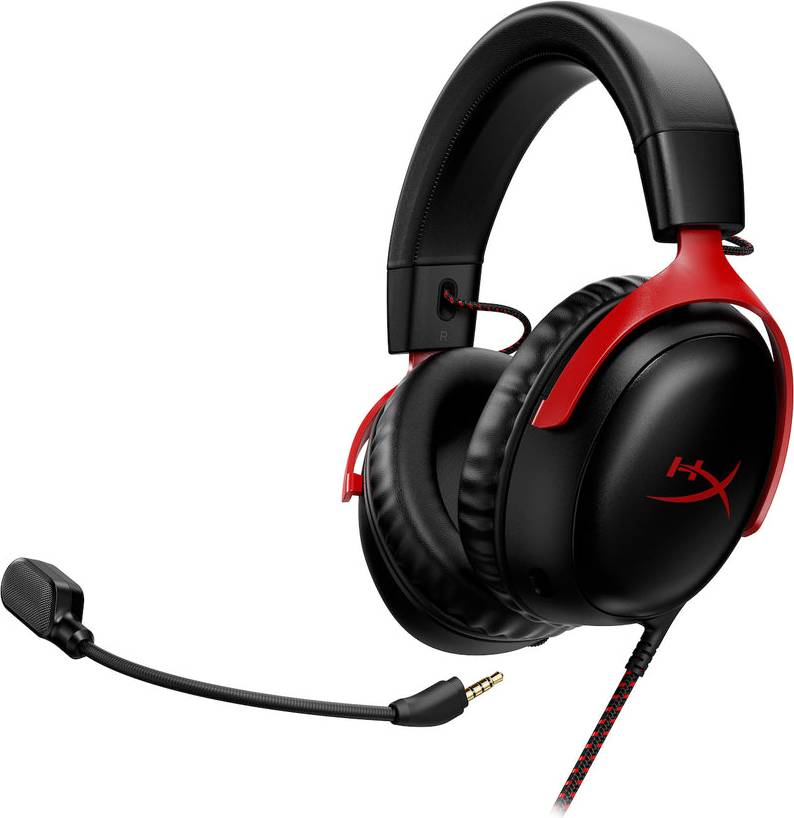
Latency is still a real limitation for wireless audio in specific contexts. Gaming, video editing, any application where audio needs to sync precisely with a visual signal — Bluetooth compression and transmission delay, even at its best, introduces lag that wired connections don’t. The professional and semi-professional audio market never moved to wireless for this reason, and serious gaming setups retain a strong preference for wired. Our HyperX Cloud III wired gaming headset has not lost ground to wireless alternatives in our sales data — if anything, the opposite.
Signal reliability in dense wireless environments remains a real-world limitation. A busy gym, a crowded commuter train, a co-working space with dozens of Bluetooth devices broadcasting simultaneously — these are environments where wired audio simply works better. No pairing failures. No dropout mid-set. No competing with forty other devices for the 2.4GHz band. The cable is a direct connection. It doesn’t care what’s around it.
The Fashion Angle — Real, But Misunderstood
The cultural driver is real and shouldn’t be dismissed. At the 2025 New York Fashion Week, Dove Cameron wore Apple EarPods woven into her hair — Vogue covered it as a key moment. Emma Watson, Harry Styles, Bella Hadid, and Charli XCX have all been photographed with wired earphones in settings where they were clearly a deliberate accessory choice rather than a forgotten leftover.
This sits within a broader Gen Z cultural movement — what commentators are calling “anti-digital” or “tech minimalism.” Having grown up entirely immersed in smartphones and always-on connectivity, a significant cohort of younger consumers is actively choosing visible simplicity. Disposable cameras. Vinyl records. Wired earphones. The cable isn’t a limitation to these buyers. It’s the point. It signals intentionality — a choice to use a tool rather than be absorbed by a device ecosystem.
What makes this culturally interesting is that it’s democratically accessible in a way most fashion trends aren’t. A £20 pair of wired earphones achieves the aesthetic that a £200 pair of wireless earbuds explicitly doesn’t. You can’t drape an AirPod case visibly. A wired cable works. The trend has taken hold precisely because it doesn’t require spending money — and that combination of cultural cachet and economic accessibility is unusual enough to be genuinely durable.
5 Reasons We Think Wired Is Here to Stay
- 1Battery anxiety is a genuine, growing fatigue
Managing charge levels across earbuds, phone, watch, and laptop is a daily cognitive overhead that didn’t exist ten years ago. A product that never needs charging removes one variable from an increasingly full battery management stack. The appeal of zero battery anxiety, once experienced, is hard to give up.
- 2Sustainability is no longer a niche concern
A wired earphone has no battery to degrade, no charging case to replace, and a lifespan measured in years rather than charge cycles. For a growing segment of UK buyers who factor environmental impact into purchasing decisions, the choice between a product designed for 2 years of use and one designed for 10 is not neutral. The headphone jack’s return to some Android flagships in 2025 reflects manufacturers noticing this shift.
- 3The discontinued premium wired models are genuinely irreplaceable
Sennheiser discontinued the CX 300 II, CX 400 II, and MX 375 without replacing them with equivalent wired products — they pivoted to wireless. The buyers who relied on those products haven’t found equivalent wireless replacements at the same price point. They’re buying genuine remaining stock of the discontinued wired models because nothing in the wireless category solves their use case as well at that price. This is a real demand driver that exists independently of any trend.
- 4Privacy and health concerns — minor but real
A small but vocal and growing segment of buyers is uncomfortable with persistent Bluetooth radiation exposure from in-ear wireless devices. The science does not support the more extreme concerns — Bluetooth is not dangerous. But the concern exists, and wired earphones provide a clean answer to it without any technical compromise. We see this question regularly from customers, particularly for earphones used during extended daily work sessions.
- 5The value-per-year calculation now favours wired at most price points
A £30 wired earphone lasting 4 years costs £7.50/year. A £150 true wireless earbud lasting 2 years before battery degradation becomes noticeable costs £75/year. The value-per-year comparison has always favoured wired — but buyers are now doing this calculation explicitly in a way they weren’t three years ago. Cost of living pressures have made people better at thinking about total cost of ownership rather than just purchase price.
We hold genuine last UK stock of the Sennheiser CX 300 II, CX 400 II, and MX 375 — all discontinued by Sennheiser and unavailable through mainstream retail channels. These products are not trending because of TikTok. They’re selling because they’re genuinely good wired earphones that haven’t been replaced with anything equivalent. When they’re gone, they’re gone.
What This Means If You’re Buying Now
The practical implication of a 20% revenue surge in wired headphones is that inventory of the good discontinued models is tightening faster than it was twelve months ago. The Sennheiser models we mentioned, the better Bose wired options, genuine discontinued stock from brands who exited the wired category — these are becoming harder to source at the right price from verified supply chains.
The other implication: the counterfeit and grey import problem in wired earphones is growing proportionally to demand. When a discontinued model starts trending, the counterfeit supply chain responds faster than any legitimate distributor can. A Sennheiser CX 300 II listed at £6.99 on a marketplace is not genuine stock of a product that left Shenzhen at a price that made that listing viable. It’s something else in a Sennheiser box. The trend is real. The risk of buying fakes of trending products is equally real.
The wired headphone comeback isn’t fashion. It’s a correction. Buyers spent five years being told to replace working products with more expensive ones that degrade faster, cost more to maintain, and fail at inconvenient moments. The 20% revenue surge is the market recognising what anyone who’d been paying attention already knew — a well-made wired earphone is not obsolete technology. It’s the right tool for a significant number of everyday use cases, and it always was.
Genuine UK stock of discontinued Sennheiser, Bose, and Beats wired earphones — while it lasts.
Headphones Comeback 2026
Wired vs Wireless UK
Gen Z Audio Trend
Sennheiser UK
Trend
