 WhatsApp

Headphones
Sennheiser CX 400 II: The One They Quietly Killed
Sennheiser CX 400 II:
The One They Quietly Killed
No press release. No farewell campaign. No “thank you for 10 great years.” Sennheiser simply stopped making the CX 400 II one day, and the market moved on before most buyers even noticed it was gone. We noticed. Here’s why that matters.
·
Product Authority
·
March 2026
7 min read
·
maibo.uk
quietly gone a decade later
what made it different
they never bothered
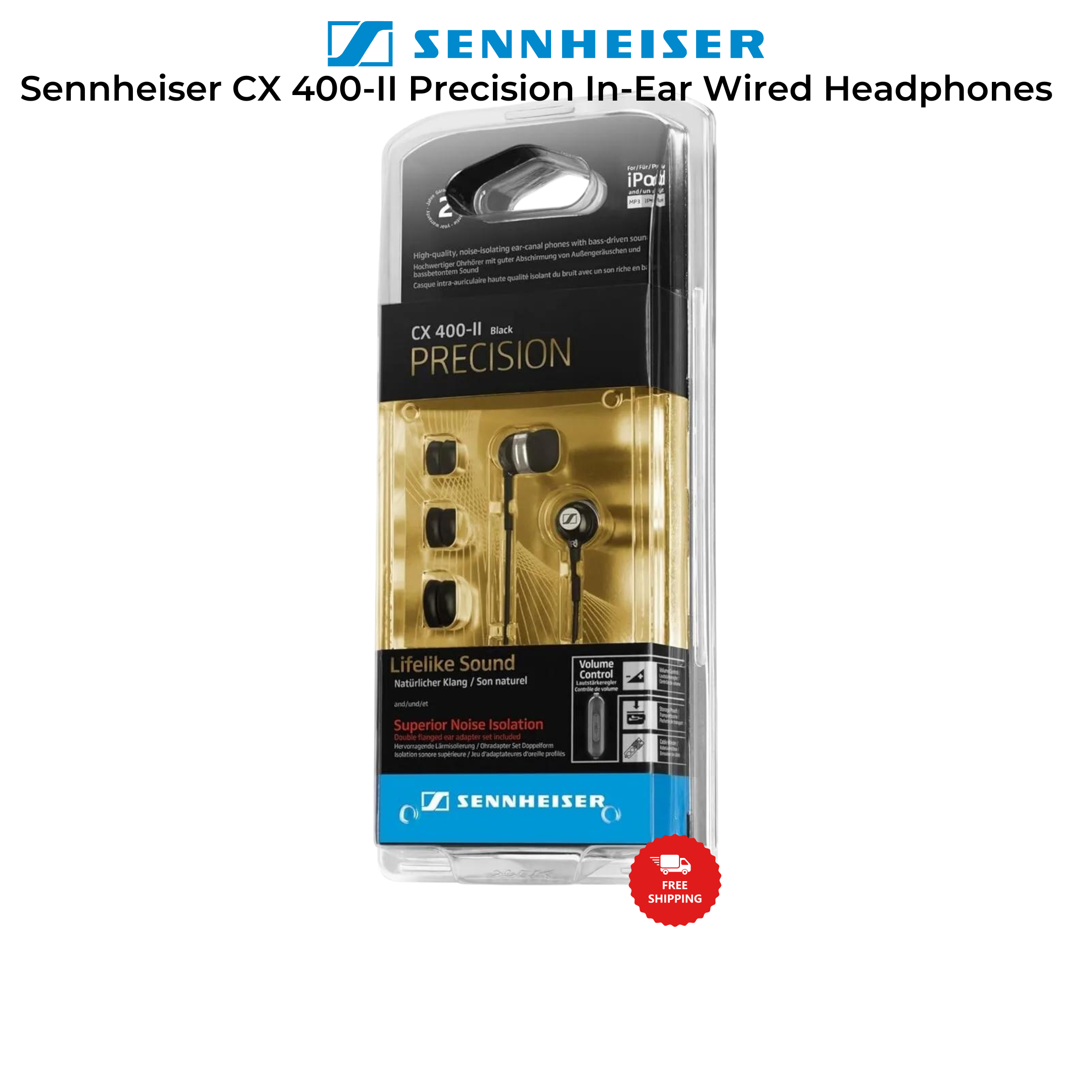
The Sennheiser CX 300 II gets most of the attention. It’s the one people write about, search for, and mourn loudly when they can’t find genuine stock. The CX 400 II lived in its shadow — a slightly more capable sibling that solved a different problem and served a different buyer, quietly and consistently, for the better part of a decade.
Then Sennheiser discontinued it. No announcement, no successor, no acknowledgement that they were removing one of the most reliable products in their consumer range. The CX 400 II simply stopped appearing in new stock. Sellers worked through their remaining inventory. And then, quietly, it was gone.
We still have genuine UK stock. This article explains what the CX 400 II actually was, how it differed from its more famous sibling, and why the gap it left in the market has never been properly filled.
CX 300 II vs CX 400 II — The Difference That Actually Mattered
On paper the two earphones look nearly identical. Same driver type, same acoustic approach, same angled in-ear design, same cable construction philosophy. Most comparison articles treated them as essentially the same product at different price points. They weren’t.
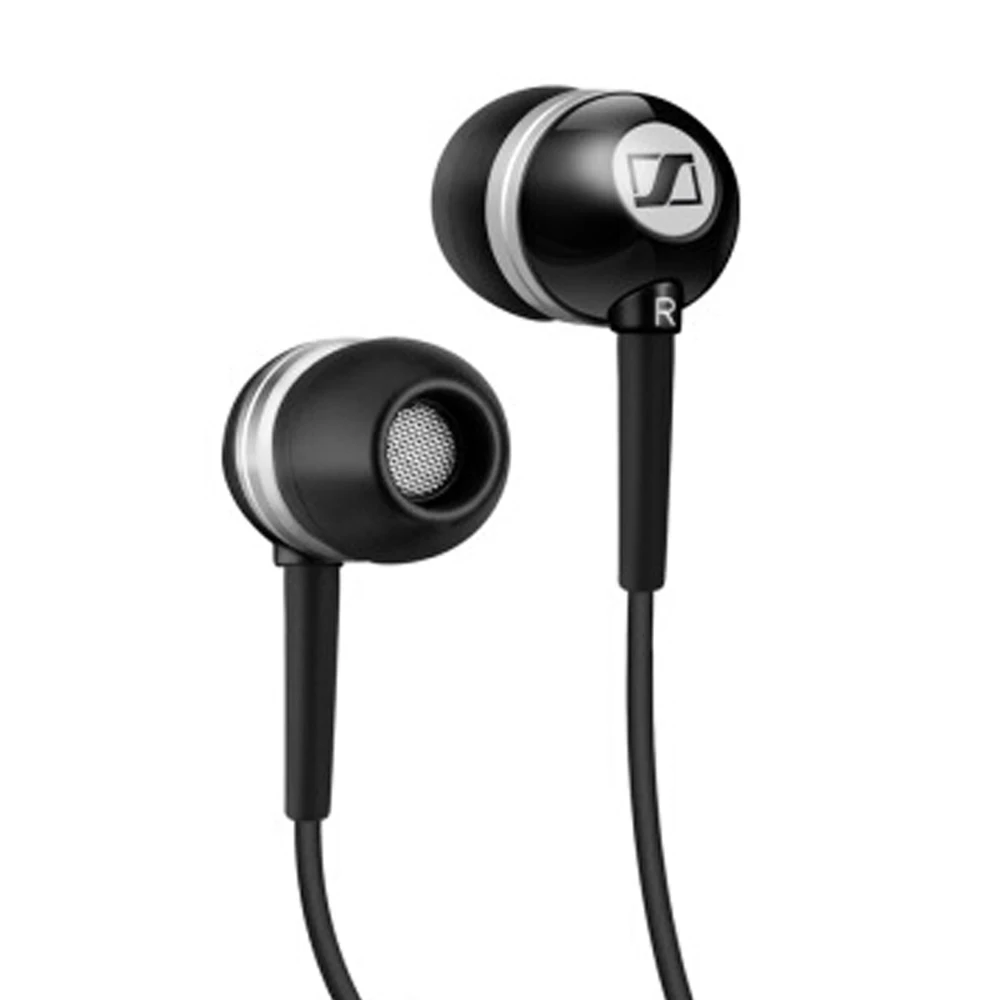
The CX 400 II added an inline remote and microphone. That’s the visible difference. What it enabled was a product that could serve as your primary earphone across every context — music, calls, voice messages, video calls — without carrying a separate headset or switching devices. In 2009, when smartphones were just beginning to reshape how people used earphones, this was forward-thinking design. By the time the product was discontinued, it had become essential for millions of daily users.
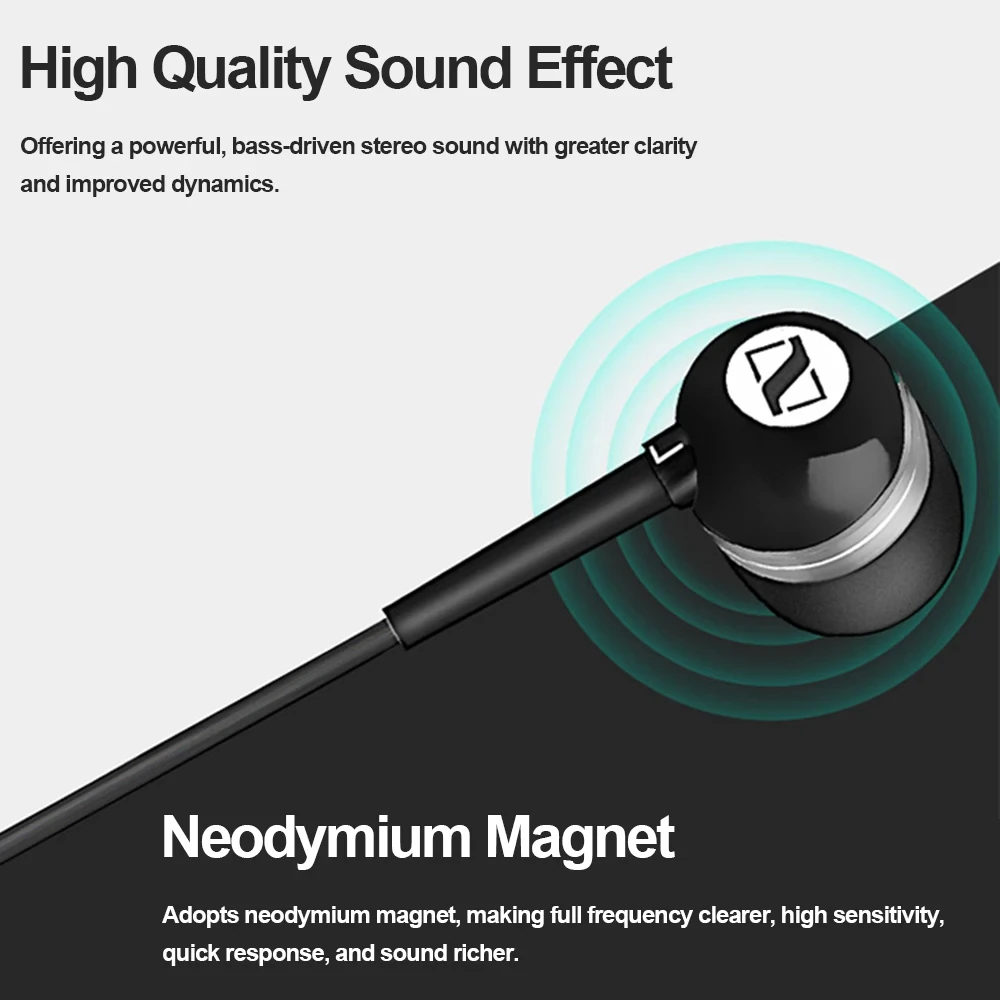
The audio signature was also slightly different. The CX 400 II had marginally tighter bass control than the CX 300 II — less bloom in the low end, slightly faster transient response. For bass-heavy music the CX 300 II could edge ahead on sheer impact. For everything else — jazz, classical, spoken word, pop, acoustic — the CX 400 II presented a more composed sound that rewarded longer listening sessions.
The CX 300 II is the earphone people want. The CX 400 II is the earphone people who actually use earphones all day actually need.
Six Reasons the CX 400 II Was a Better Daily Driver
Wired earphone microphones at this price point range from adequate to embarrassing. The CX 400 II’s mic sat in the correct zone — clear enough for calls in quiet environments, usable in moderate ambient noise, and positioned on the cable at a distance from the mouth that prevented excessive handling noise when moving. For the typical daily commuter or desk worker, it worked. That’s the bar and the CX 400 II cleared it comfortably.
Answer calls, end calls, pause music, skip tracks — the inline remote on the CX 400 II handled all of it without requiring you to locate your phone. On a commute, during a run, in a meeting corridor — the ability to manage audio and calls without pulling your phone out of a pocket is a genuine daily quality of life improvement that sounds trivial until you’ve used it for six months and then lost it.
The CX 300 II’s bass is impactful and satisfying in short bursts. Over three or four hours of continuous listening the emphasis can register as fatigue — a quality shared by many bass-forward earphones regardless of price. The CX 400 II’s more controlled low end presented music with less exaggeration, which meant listening sessions that ran longer before the ear asked for a break. For all-day office use, this was the practical choice.
Sennheiser used a slightly different cable finish on the CX 400 II that resisted tangling more effectively than the CX 300 II’s cable. The difference was noticeable for anyone who kept their earphones loose in a bag or pocket — the CX 400 II emerged ready to use rather than requiring the two-minute untangle ritual that most earphone cables demand. Over 250 working days a year, that time adds up.
The CX 400 II’s remote was designed to work with both Android and iOS devices via the standard 3.5mm CTIA wiring. Unlike some competing products that required manufacturer-specific remotes, the CX 400 II’s single-button functionality operated correctly across virtually every device with a 3.5mm input. In an era of fragmented smart device ecosystems, this universality was an underrated engineering decision.
The CX 400 II inherited every build quality decision from its sibling — proper strain relief at the 3.5mm jack, reinforced cable-to-housing joints, three tip sizes included, angled nozzle for comfort. The additional inline remote didn’t introduce any quality regressions. The extra component was integrated cleanly into the cable and didn’t create a new failure point. We have seen very few CX 400 II returns for hardware reasons across years of selling it.
·
maibo.uk
Why Sennheiser Killed It — And Why That Was the Wrong Decision
The commercial logic behind the discontinuation follows the same pattern we saw with the CX 300 II and MX 375. Sennheiser needed to move the market toward their wireless range — the CX True Wireless, the Momentum series, the higher-margin products that generate more revenue per unit and require repeat purchases as batteries degrade.
A wired earphone with an inline mic that works perfectly, lasts for years, and never needs charging is genuinely bad for a brand’s revenue cycle. The buyer who finds the CX 400 II and uses it daily for four years generates one sale. The buyer who buys wireless earphones generates a sale, then a replacement sale when the battery degrades, then potentially another when the charging case develops a fault. The arithmetic is clear.
The mistake was assuming that discontinuing the wired option would automatically push buyers toward Sennheiser wireless. It didn’t. Buyers who wanted wireless already had wireless options. The CX 400 II’s core users — commuters, office workers, anyone who spent significant time on calls — had specific reasons for preferring wired. Those buyers didn’t upgrade to Sennheiser wireless when the CX 400 II was discontinued. They looked for alternatives, often from different brands.
The CX 400 II’s discontinuation has made it a target for counterfeiters, particularly on marketplace platforms. Fake units replicate the housing and packaging convincingly but use inferior drivers, thinner cable construction, and microphones that often fail within weeks. The inline remote on counterfeits frequently stops responding to button presses after light use. If the price seems significantly below what genuine discontinued stock should command — treat it as a warning, not a deal.
What Replaced It — And Why Nothing Quite Did
In the wired earphone with inline mic category, several products have tried to fill the space the CX 400 II occupied. Most fail in one of two directions: they prioritise audio quality at the expense of mic performance, or they prioritise mic performance at the expense of build quality.
The CX 400 II’s particular achievement was doing both adequately without excelling at either at the expense of the other. It was a balanced product — not the best earphone you could buy for pure audio, not the best call headset you could buy, but the best single product that served both purposes every day without compromise or mode-switching.
That balance is genuinely hard to engineer at this price point. The brands that have tried to replicate it mostly haven’t. Which is why, years after discontinuation, genuine CX 400 II stock continues to move. Not because of brand loyalty. Because the gap it left is still there.
Who Should Buy the CX 400 II Right Now
Anyone who uses earphones for calls as much as music. Anyone who works from home and wants a single earphone solution for their meetings and their background music. Anyone who commutes and wants the ability to answer calls without reaching for their phone.
Also: anyone who has previously owned a CX 400 II and has been searching for genuine replacement stock. We hear from this group regularly. They know exactly what they want and why they want it. The answer, while we have stock, is straightforward.
The CX 300 II is the better earphone if calls are not a daily requirement. The CX 400 II is the better earphone if they are. That distinction is simple, and it’s the only question worth asking before choosing between them.
·
maibo.uk
The Sennheiser CX 400 II was a better all-day earphone than the model that overshadowed it. Sennheiser killed it quietly because it was too good to generate repeat purchases — and the market has been quietly worse for it ever since. While genuine UK stock exists, the choice is still available. After that, it isn’t.
Original packaging. Inline mic. Verified authentic. UK dispatch. When it’s gone — the genuine article is gone for good.
CX 400 II
Wired Earphones UK
Discontinued Stock
Earphones with Mic
Product Authority
In stock at maibo
Sennheiser CX400 II Precision (Black) £13.88 – free UK delivery
Philips SHP9500 Open-Back HiFi Headphones £52.88 – free UK delivery
More from the Journal
Keep reading