 WhatsApp

Headphones
Headphone Warranty UK: Your Rights Last 6 Years, Not 12 Months
Your Headphone Warranty Lasts 12 Months.
Your Rights Last 6 Years. The Difference Costs You Money.
Fewer than 30% of UK buyers know they have legal protection that outlasts the manufacturer warranty by five years. Retailers do know. They count on you not knowing. Here’s exactly what the Consumer Rights Act 2015 actually gives you — and how to use it.
Consumer Rights Act 2015
their full rights
warranty you don’t need

A UK buyer pays £120 for a pair of premium headphones. At checkout the retailer offers a £15 extended warranty — “12 extra months of protection.” Reasonable enough. They tick the box. Fifteen months later the right channel cuts out. They contact the retailer expecting the warranty to cover it. The response: “The manufacturer’s warranty has expired.”
What the retailer hasn’t told them — and is hoping they won’t ask — is that under the Consumer Rights Act 2015, they have a legal claim against the retailer for another four years and nine months. Not against the manufacturer. Against the retailer. For free. Without registration, without paperwork, without the £15 extended warranty.
This is the gap I’ve watched eat into UK buyers for 18 years on the seller side. The manufacturer warranty is a marketing document. The statutory right is the law. They are not the same thing — and treating them as the same is how buyers consistently lose money on faulty electronics they had every right to have repaired or refunded.
What the Consumer Rights Act 2015 Actually Says
The Consumer Rights Act 2015 — which replaced and consolidated decades of earlier consumer protection law — establishes three baseline requirements that every product sold to a UK consumer must meet. They are not optional, cannot be waived in the small print, and apply regardless of what any warranty document says.
Satisfactory quality. The product must be of the standard a reasonable person would consider satisfactory given the price paid, the description, and what the buyer was told. A £120 pair of headphones is held to a different standard than a £20 pair — but both must meet the standard appropriate to their price point.
Fit for purpose. The product must do what it is sold to do, including any specific purpose the buyer made known to the retailer at the time of sale. Headphones must reproduce sound, work with the devices they advertise compatibility with, and not fail under reasonable use.
As described. The product must match the description given in the listing, the packaging, and the retailer’s marketing. A noise-cancelling headphone must actually cancel noise. A “studio quality” headphone must reasonably approach that claim.
Any product that fails any one of these three tests triggers your statutory rights. In England, Wales, and Northern Ireland you have up to six years from the date of purchase to bring a claim. In Scotland it’s five years. Crucially, the claim is against the retailer — the entity that sold you the product — not the manufacturer. The retailer cannot redirect you to the manufacturer to evade their own legal liability.
“The manufacturer warranty is a marketing document. The statutory right is the law. The retailer who tells you the warranty has expired is hoping you don’t know the difference.”
— Halil Ibrahim Tutuncu, Maibo
Why the 12-Month Warranty Number Is Misleading
Almost every consumer electronics product in the UK is sold with a “12-month manufacturer warranty.” Major brands — Sony, Bose, Sennheiser, Beats — all use this duration. It has become the default consumer expectation. It is also, in most cases, the maximum the brand is willing to commit to in writing.
The 12-month figure exists because it’s enough to address most manufacturing defects — which surface in the first weeks or months of use — without committing the brand to ongoing support for normal product aging. From a brand perspective, this is rational. From a consumer perspective, it creates a misleading impression that 12 months is the limit of your protection. It isn’t. It’s the limit of the manufacturer’s voluntary commitment.
Your statutory right under the Consumer Rights Act runs for six years from the date of purchase. Within that period, if a product fails in a way that breaches the three baseline requirements — and the failure isn’t from your own misuse or normal wear — you have a legal claim against the retailer. The claim doesn’t expire when the manufacturer warranty does. The two operate on entirely separate legal frameworks.
The complication: the burden of proof shifts at the six-month mark. In the first six months, the law assumes any fault was present at the time of sale unless the retailer can prove otherwise. After six months, the burden flips — the buyer must demonstrate that the fault wasn’t from misuse and represents a failure of one of the three baseline requirements. This is a meaningful distinction in practice, but it doesn’t eliminate the right. It just means a five-year-old failed headphone is a harder claim to win than a five-month-old one.

What “Reasonable Lifespan” Means for Electronics
The statutory rights framework hinges on a concept that isn’t written into the act as a precise number: how long a product should reasonably last. There is no statutory table that says headphones must last X months. The standard is what a reasonable person, paying the price you paid, would expect.
In practice, UK consumer law and Trading Standards have built up an informal expectation framework for electronics:
- 1Premium headphones (£100+)
Reasonable lifespan expectation: 3–5 years of normal use. A premium wired earphone that fails at 18 months has a strong statutory claim. A premium wireless earbud failing at 24 months due to battery degradation is more complex — battery wear is anticipated, but unusually rapid degradation can still qualify.
- 2Mid-range headphones (£30–£100)
Reasonable expectation: 2–4 years. The lower the price, the lower the expectation — but the principle still applies. A £60 headphone that fails at 13 months is still within the statutory protection window. The manufacturer warranty has expired; your statutory rights against the retailer have not.
- 3Budget headphones (under £30)
Reasonable expectation: 1–2 years. The lower price means a lower bar for “satisfactory quality” — but it doesn’t mean no bar. A £20 headphone that fails after three months still has clear statutory protection. The retailer cannot defend “it was only £20” as a reason for early failure.
- 4Wireless earbuds (battery-dependent)
Wireless earbuds are the hardest category. Battery degradation is an inherent product limitation, not a defect — but unusually rapid degradation can still qualify. A £200 wireless earbud whose battery delivers 50% of original capacity at 14 months is showing accelerated wear that can support a statutory claim. The brand will resist this. The law supports it.
- 5Cable failure on any wired headphone
A wired headphone cable failing within 18 months of normal use is one of the strongest statutory cases. Cable construction is entirely within the manufacturer’s control, and cable failure represents a clear breach of “satisfactory quality” for any earphone in any price range. This is the failure mode retailers most consistently try to deflect — and most consistently lose when consumers push back with knowledge of the law.
In 18 years of UK marketplace selling, the disputes I’ve seen sellers lose are almost always the ones where a buyer correctly invoked statutory rights for a product that failed within reasonable lifespan. The disputes where buyers gave up too early — typically when told the warranty had expired — are the ones where money was lost unnecessarily.
How to Actually Invoke Your Rights
Knowing the law is half the work. The other half is using the right language with the right retailer at the right time. Five practical steps that consistently produce results:
1. Contact the retailer, not the manufacturer. Your statutory rights run against the entity that sold you the product. If you bought from Currys, your claim is against Currys — not Sennheiser. The retailer cannot direct you to the manufacturer to avoid their own legal liability. If they try, your response is: “Under the Consumer Rights Act 2015, my claim is with you as the seller.”
2. Use the specific statutory language. “Your manufacturer warranty has expired but my statutory rights under the Consumer Rights Act 2015 have not. The product has failed to be of satisfactory quality / fit for purpose / as described, and I’m requesting a repair, replacement, or refund.” This language signals knowledge of the law. Retailer customer service is trained to escalate cases where statutory rights are explicitly invoked.
3. Put it in writing. Email, not phone. Phone calls are easy to deny later. A clear written request creates a paper trail that supports escalation to alternative dispute resolution or court if needed. Most cases never reach that point — but the existence of the paper trail is what makes them not reach it.
4. Know your remedies. The law gives you a hierarchy: first repair or replacement at the retailer’s choice. If repair or replacement fails (or is impossible), you’re entitled to a refund — partial or full depending on how long you’ve had the product. After six months the refund may be reduced to reflect use, but the right to escalate exists.
5. Escalate strategically. If the retailer refuses, your next step is Alternative Dispute Resolution (ADR) — many retailers are members of approved ADR schemes. If that fails, the small claims track of the County Court handles consumer disputes under £10,000 with relatively low cost and complexity. Citizens Advice can guide you through the process. The threat of formal escalation often resolves cases that retailer customer service initially refused.
At Maibo, every product sold on maibo.uk, eBay, or OnBuy comes with the same six-year statutory protection — because we cannot legally remove it, and because we wouldn’t want to. The 12-month manufacturer warranty is what the brand commits to. Your protection against us as the retailer is the law. This is true whether or not we mention it on the listing, whether or not the buyer pays for an extended warranty, and whether or not the manufacturer warranty is still in effect. Most UK sellers know this. The honest ones tell you.
The Extended Warranty Question
A common retailer offer at checkout: “Add extended warranty for £15 — covers an extra 12 months.” The math seems simple. The legal reality is more complex.
Extended warranties are insurance products, regulated by the Financial Conduct Authority. They cover specific failure scenarios under specific conditions, typically with claim limits, excess fees, and exclusions that the marketing material doesn’t emphasise. For most consumer electronics — and headphones particularly — the coverage extended warranties provide is significantly narrower than the protection your statutory rights already give you for free.
The case where extended warranties have genuine value: products where failure is likely outside the statutory rights window or in ways the statutory framework doesn’t easily cover. For headphones, this is rare. For very expensive electronics with complex failure modes — premium camera equipment, professional audio gear — the calculation can be different. But for a £120 headphone, the £15 extended warranty is usually selling protection the law already guarantees.
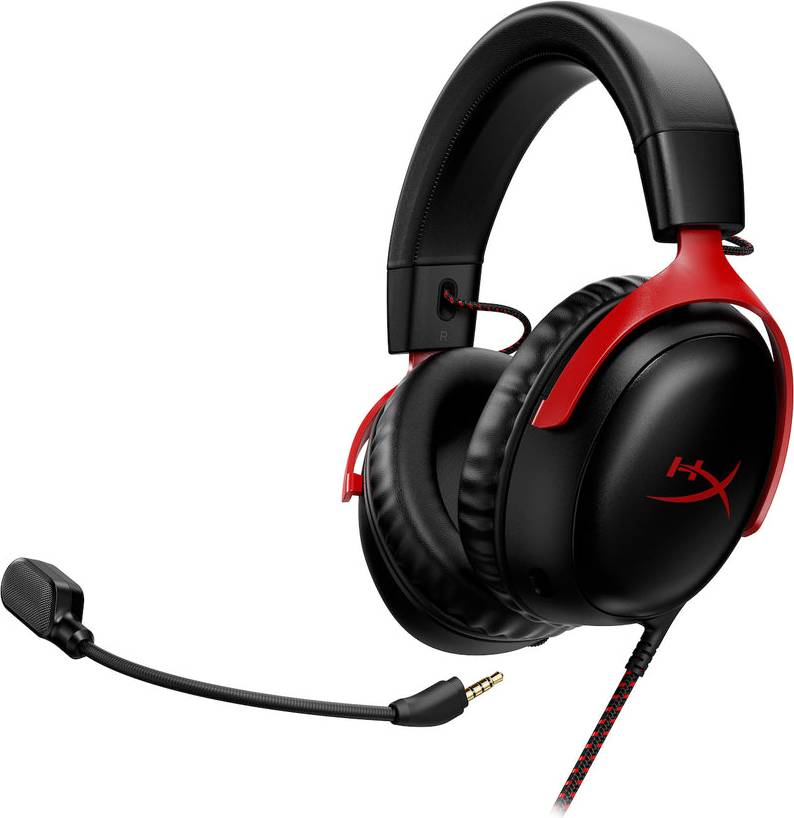
The manufacturer warranty is a marketing document. The Consumer Rights Act 2015 is the law. They are not the same, they don’t operate on the same timeline, and the difference is worth real money to UK buyers who know how to use it. Save the £15 on the extended warranty. Keep your receipt. If a headphone fails within reasonable lifespan, contact the retailer — not the manufacturer — and use the words “statutory rights under the Consumer Rights Act 2015.” That sentence is worth more than any warranty document the brand can offer you.
Buy from a UK retailer who acknowledges your statutory rights — not one who hopes you won’t ask.
Headphone Warranty UK
Statutory Rights Electronics
Buyer Education
Extended Warranty
Faulty Goods UK
More from the Journal
Keep reading