 WhatsApp

Insider
What UK Buyers Should Check Before Paying
AI Is Excellent at Finding Products and Blind to Four Specific Things —
What UK Buyers Should Check Before Paying
AI product research genuinely works — it parses a natural-language description no search box accepts and returns a shortlist in seconds. It is also measurably unreliable on four specific things: current price, stock, recent quality problems, and commercial neutrality. Knowing which half is which is what separates a good AI-assisted purchase from an expensive one.
ChatGPT invents a price
self-serving to Amazon
advice before buying

Product research through AI assistants has moved from novelty to mainstream behaviour with unusual speed. Adobe recorded a 4,700% year-on-year increase in AI-sourced product discovery, and eMarketer survey data puts the share of consumers using generative AI to research products before purchasing at nearly 38% — roughly double the previous year’s 19%. For a great many UK shoppers, the first step in buying something is now a conversation rather than a search box.
The enthusiasm is warranted for what AI does well. Describing a need in plain language — a wired earphone for office calls that isolates background noise and costs under £20 — and receiving a reasoned shortlist is genuinely better than translating that need into keywords and scrolling through a marketplace. The capability is real.
What is less understood is where the capability stops. The measurements available in 2026 are specific enough to be useful: independent analysis by Retail Technology Innovation Hub found ChatGPT Shopping hallucinates prices in 28% of queries, and that 83% of Amazon Rufus results were self-serving to Amazon in some dimension. Documented Rufus failures include recommending discontinued items as in stock, fabricating price points, and confidently stating a product includes a feature explicitly absent from its own description. UK shoppers appear to sense this — only 46% say they fully trust AI recommendations and 89% verify what an assistant tells them before buying. What follows is a breakdown of the four failure modes worth verifying, and why each one occurs.
Why the Failures Cluster Where They Do
The pattern is not random. An AI assistant answers from two different kinds of information, and the reliability of its answer depends entirely on which one it drew from.
Where the assistant is reading live data — a retailer’s current catalogue, a shopping feed updated continuously — accuracy is high and the answer can be trusted. Where it is answering from general model knowledge absorbed during training, it is producing a plausible statement rather than a verified one. The critical problem for a shopper is that both answers arrive in identical language and with identical confidence. Nothing in the tone distinguishes a live catalogue lookup from an interpolated guess.
This is why the failures concentrate on facts that change frequently. Product specifications, category concepts, and the general reputation of a brand are stable — the model’s training data remains broadly correct on these. Prices, stock levels, current promotions, and recent quality problems change weekly or daily, and any answer about them drawn from training data is describing a world that no longer exists.
“An AI assistant is reliable on what a product is and unreliable on what it currently costs. Both answers arrive in the same confident sentence, which is precisely the difficulty.”
— Andrew Dorce, Maibo
The Four Things to Verify Independently
- 1Price — the most frequently invented figure
At a 28% hallucination rate on price queries, roughly one in four prices an AI assistant states is not the current price. Sometimes it is an old figure from training data, sometimes a plausible number generated to fill a gap. The practical risk is anchoring: a shopper told a product costs £45 then judges every real listing against that number, treating a genuine £52 price as overpriced and a £28 counterfeit as a bargain. Always read the price from the retailer’s own page rather than from the assistant’s summary.
- 2Availability — including whether the product still exists
Recommending discontinued items as in stock is a documented failure across assistants, and it is a particular problem in categories where discontinuation is common. A model trained when a product was widely available has no way of knowing the manufacturer withdrew it eighteen months later. This matters especially for wired earphones and legacy accessories, where the difference between a discontinued product and a current one determines whether the buyer is looking at genuine remaining stock at a fair price or at counterfeits filling the gap.
- 3Recent quality problems the training data predates
A product’s reputation in a model’s training data reflects the period that data was collected. If a manufacturing batch developed a fault last quarter, or a revision quietly downgraded a component, the assistant will still describe the product as it was reviewed two years ago. Recent buyer reviews on the actual listing — sorted by most recent, not most helpful — are the correction for this. The gap between glowing older reviews and critical recent ones is exactly the signal an AI summary flattens out.
- 4Commercial neutrality — whose interest the answer serves
An assistant built into a retailer has that retailer’s commercial interests in its design. The finding that 83% of Amazon Rufus results were self-serving to Amazon in some dimension — skewing toward own-brand products, sponsored listings, and higher-margin private labels — is not evidence of dishonesty so much as of where the tool sits. A general-purpose assistant like ChatGPT has a different bias: it reflects whatever content is most abundant and best optimised on the web, which favours brands investing in content over brands making better products. Neither is neutral. Understanding which bias applies is more useful than assuming any assistant is impartial.

Where AI Genuinely Outperforms the Old Method
Listing the failure modes without the strengths would give a misleading picture. On the things AI does well, it does them considerably better than a keyword search — and these strengths map neatly onto the categories where information is stable rather than fast-changing.
Translating a need into a product category. A shopper who knows they want something that solves a problem but does not know what that product is called is exactly the case a search box handles badly and an AI assistant handles well. Describing the problem produces the category, the relevant terminology, and the specifications that matter — which then makes every subsequent search more effective.
Explaining specifications in plain language. Understanding what USB Power Delivery means, why driver tuning matters more than driver diameter, or what distinguishes MFi from USB-IF certification previously required reading forums for an hour. An assistant compresses this into a few minutes, and on stable technical concepts the accuracy is high because the underlying information does not change.
Flagging obvious price anomalies. Somewhat against expectation, assistants are reasonably good at identifying when an advertised price is implausibly low for a branded product — the reasoning is category-level rather than specific-price-level, so the hallucination problem does not apply in the same way. A shopper asking whether a £6.99 listing for a £45 product is plausible will generally get a useful warning.
Narrowing a wide field quickly. Reducing forty candidate products to three worth examining is genuine time saved, provided those three are then verified rather than trusted. The narrowing is the value; the verification is still the buyer’s job.
One habit substantially improves the reliability of AI product research: ask the assistant where its information came from and how current it is. A well-designed assistant will distinguish between what it read from a live source and what it is stating from general knowledge — and will say plainly when it does not have current data rather than generating a plausible figure. An assistant that responds to that question with the same confident tone it used for everything else has told you something useful about how much weight to put on the original answer. The most reliable thing an assistant can say about a price is that it does not know the current one.
A Workflow That Uses Each Layer for What It Does Best
The sensible approach is not choosing between AI and traditional research but assigning each the part it handles reliably. Three layers, in order.
Layer one — AI for discovery and understanding. Describe the need, learn the category, understand which specifications matter, and get a shortlist. Ignore any price the assistant states. Treat any stock claim as unverified.
Layer two — the retailer’s page for facts. Read the current price, the stated availability, the condition description, and recent reviews sorted by date. This layer supplies everything the assistant is unreliable on, and it takes two minutes.
Layer three — the seller directly, where authenticity matters. For discontinued products, branded electronics in categories where counterfeits circulate, or anything where the listing photograph could be misleading, a message to the seller before purchase resolves what neither of the first two layers can. A seller holding genuine stock answers specifically about provenance. One who is not, answers vaguely. That distinction is not available to any AI assistant, and it remains the most reliable verification step a buyer has.
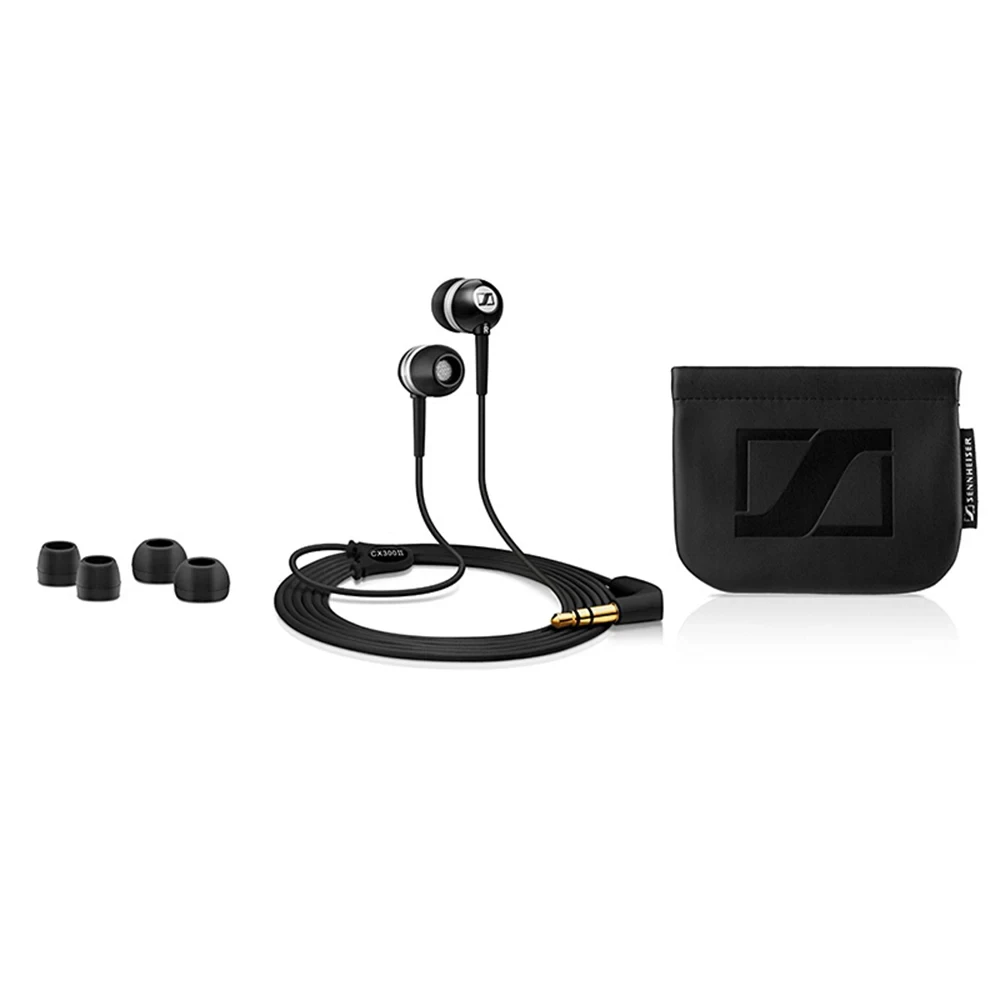
AI product research is a real improvement on keyword searching for discovery, terminology, and narrowing a wide field. It is measurably unreliable on price, stock, recent quality changes, and commercial neutrality — and it delivers both kinds of answer in the same confident voice. Use the assistant to work out what to buy. Use the retailer’s page to confirm what it costs and whether it exists. Use a message to the seller when authenticity is the question. The 89% of shoppers already verifying before they buy have the right instinct — the four things above are what that verification should actually cover.
Real stock, current prices, and a seller you can message directly — genuine electronics from a UK warehouse, dispatched same day before 15:00.
AI Product Research
ChatGPT Shopping
AI Hallucination
Amazon Rufus
Buyer Education
More from the Journal
Keep reading