 WhatsApp

Insider
3A, 5A, 6.5A: What the Numbers on a USB-C Cable Actually Mean
3A, 5A, 6.5A: What the Numbers on a USB-C Cable Actually Mean —
And Why More Amps Isn’t a Ladder
A 3A cable caps charging at 60W no matter how powerful the charger is. A 5A cable reaches 100W — but only if it has a chip inside that says so. And 6.5A isn’t a higher rung on the same ladder at all; it belongs to a completely different charging system. Here’s what each number does, and how to buy the right one.
3A USB-C cable
reaches under PD 3.1
define a 6.5A cable
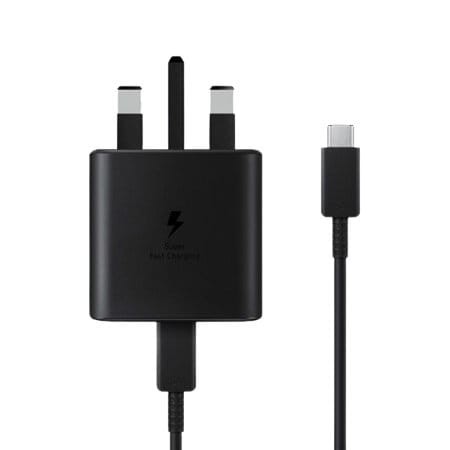
USB-C was meant to end cable confusion. One connector, every device, no more drawer of incompatible leads. The connector part worked. The cable part did not — because underneath an identical-looking plug, USB-C cables vary enormously in what they can actually carry, and almost nothing about that variation is visible from the outside.
The number buyers encounter most often is the current rating: 3A, 5A, occasionally 6.5A. The intuitive reading is that these are rungs on a ladder — more amps, more power, better cable. That reading is wrong in two separate ways. More amps only helps if the device can use them, and 6.5A is not a higher rung at all. It belongs to a different charging system that works on the opposite principle to USB Power Delivery.
What follows is what each rating physically means, the chip that decides whether a cable can use its rating at all, why cable thickness tells you nothing, and how to match a cable to a device without paying for capability that will never be used.
Watts, Volts and Amps — the Equation Behind Every Rating
All charging specifications rest on one relationship: watts = volts × amps. Power is what charges the battery, and there are two ways to deliver more of it. Raise the voltage, or raise the current. This single choice is what separates the entire USB-C charging landscape into two camps, and it explains almost every point of confusion that follows.
USB Power Delivery — the official standard maintained by the USB Implementers Forum and used by Apple, Samsung, Google, and every laptop maker — chose to raise voltage. It steps up from 5V to 9V, 15V, 20V, and in the newest specification 28V, 36V and 48V, while keeping current relatively modest. The advantage is that higher voltage at lower current generates less heat in the cable, which is why PD cables can be thin and long.
Within that framework the current rating becomes the limiting factor at each voltage step. A 3A cable at 20V gives 60W. A 5A cable at 20V gives 100W. A 5A cable at 48V, under the newer Extended Power Range specification, gives 240W. Note what changed to reach 240W: not the amps, which stayed at 5A, but the voltage. This matters because it explains why there is no 10A consumer cable — the standard raises voltage instead of current, so 5A is where current stops.
“A 3A cable caps at 60W. Plug it into a 240W charger and you still get 60W. The cable is the ceiling, and no amount of charger is going to raise it.”
— John Matt, Maibo
The E-Marker: the Chip That Decides Everything
Here is the part that surprises most buyers. A USB-C cable does not simply carry whatever power is pushed through it. Before any high-power charging begins, the charger interrogates the cable and asks what it can handle. The cable answers through a small chip embedded in the connector housing called an E-Marker — an electronically marked cable assembly.
The rule is absolute: if the charger detects no E-Marker, it assumes the cable is rated for 3A and refuses to supply more. Not as a suggestion, as a hard safety cap. This is why a genuinely well-built cable with thick copper can still be limited to 60W — if it cannot declare its capability electronically, the charger has no way to verify it and will not take the risk.
The chip declares several things: maximum current, supported voltage class, data speed capability, and whether the cable supports Extended Power Range. Any cable claiming 5A, 100W, or 240W must contain one. Basic 3A cables generally do not need one, though some include it anyway for data-speed reasons.
Two practical consequences follow. First, cable thickness is not a reliable signal. Bench measurements comparing 60W, 100W and 240W cables show outer diameters differ only slightly — not enough to identify wattage by eye or feel. Second, power rating and data speed are completely separate. A 240W cable running at USB 2.0 speed of 480 Mbps is not faulty; it is a normal product. A cable that charges a laptop at full speed may still copy files slowly, and a listing that advertises one tells you nothing about the other.
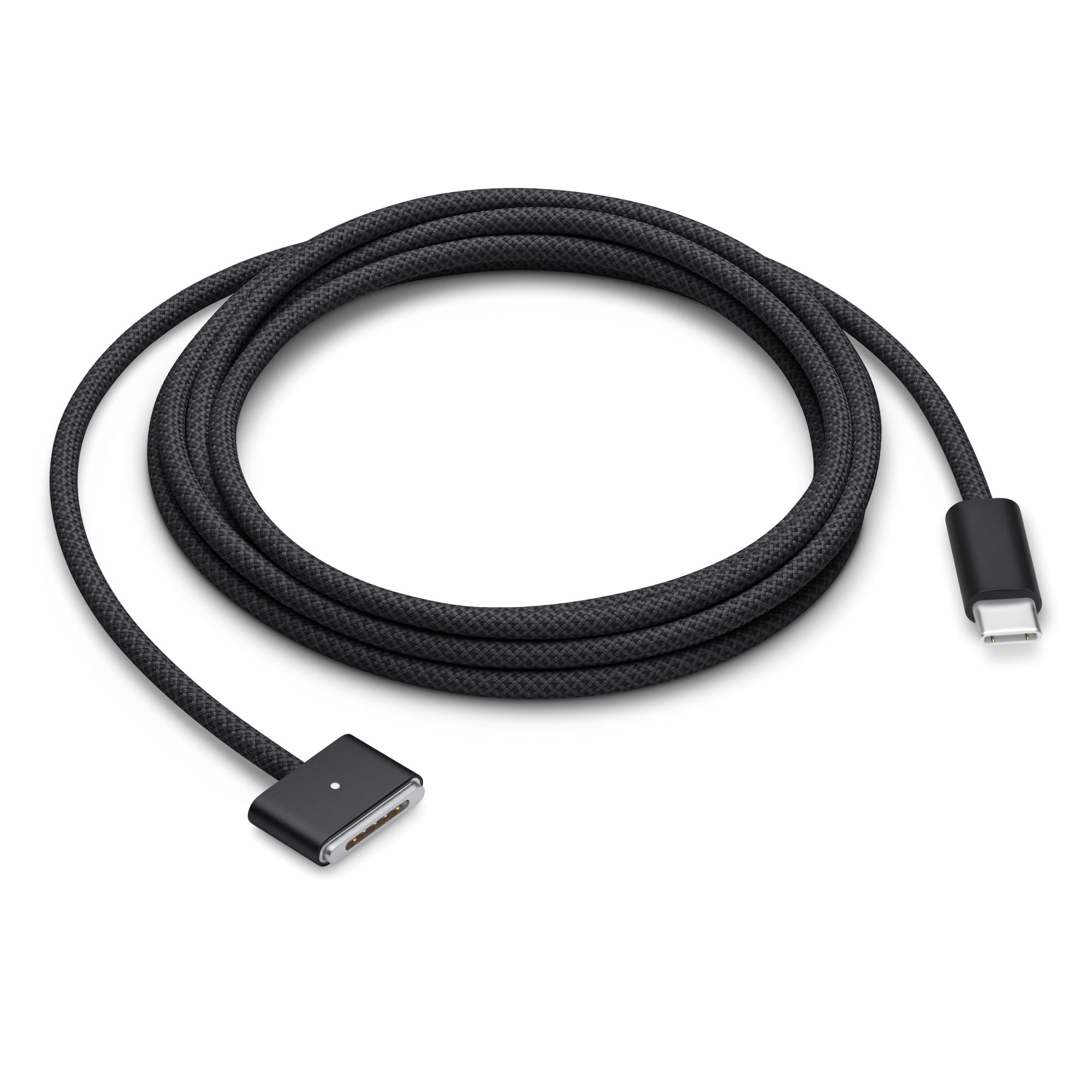
6.5A: Not a Higher Rung, a Different Ladder Entirely
This is where the ladder model breaks down completely. There is no 6.5A tier in the USB Power Delivery specification. The standard defines 3A and 5A, and reaches higher wattages by raising voltage rather than current. A 6.5A cable is not a more capable USB-C cable — it belongs to a different system.
That system is SUPERVOOC, OPPO’s proprietary fast-charging technology, also sold as Warp Charge on OnePlus and SuperDart on Realme. It made the opposite engineering choice to USB PD. Where Power Delivery raises voltage and keeps current low, SUPERVOOC keeps voltage low and pushes current high. Both reach 65W, by opposite routes:
USB PD 65W: roughly 20V × 3.25A. SUPERVOOC 65W: 10V × 6.5A. Same wattage, entirely different electrical behaviour.
The reason OPPO went this way is thermal. Converting voltage down inside a phone generates heat in the phone, which forces charging to throttle. By doing the voltage conversion in the wall adapter and sending low-voltage high-current power down the cable, SUPERVOOC keeps the phone cooler and sustains full speed for longer. The trade-off is that high current needs a cable built for it — proprietary SUPERVOOC cables use larger contacts and, on USB-A versions, an additional signal pin that ordinary cables do not have.
The practical consequences matter more than the theory. A 6.5A SUPERVOOC cable delivers its full speed only with a matching OPPO, OnePlus or Realme charger and a phone that supports the protocol. All three pieces must match. Plug that same cable into a standard USB-C charger and it works as an ordinary cable at ordinary speed. Equally, plugging a standard USB-C cable into a SUPERVOOC charger drops the phone back to normal charging. The cables are backward compatible across OPPO’s own generations — VOOC, Dash, Warp — but they are not a general upgrade for anyone else’s device.
The Weakest Link Always Wins
Charging power is negotiated between three components — the charger, the cable, and the device — and the final speed is set by whichever of the three is most limited. This principle resolves most of the questions buyers ask about why charging is slower than expected.
A 240W cable connected to a 65W charger delivers 65W. A 240W cable and a 240W charger connected to a laptop that accepts 100W deliver 100W. And a 3A cable between a 140W charger and a 140W laptop delivers 60W, because the cable is the constraint. Buying a more capable cable improves nothing unless the cable was the bottleneck — and buying a more capable charger improves nothing if the cable is still 3A.
Which Rating Each Device Actually Needs
-
1Phones and tablets — 3A is genuinely enough
An iPhone draws around 27W at most. Most Android flagships charging over USB PD sit between 25W and 45W. All of these are comfortably inside the 60W a 3A cable provides, because the phone reaches its wattage by raising voltage rather than current. Paying extra for a 5A cable to charge a phone buys headroom the phone will never use. The exception is OPPO, OnePlus and Realme devices using SUPERVOOC, which need their matching proprietary cable.
-
2Laptops — 5A e-marked, without exception
Any laptop charging above 60W needs a 5A e-marked cable. A MacBook Pro on a 96W or 140W adapter connected through a 3A cable will charge at 60W — it still works, but slowly, and often more slowly than the machine consumes under load. This is the single most common cause of a laptop that charges while asleep but barely holds its level while in use. If the laptop charger is rated above 60W, the cable must be 5A.
-
3240W EPR cables — for high-draw laptops and future headroom
Extended Power Range reaches 240W at 48V and 5A. In practice this tier serves gaming laptops, mobile workstations, and anyone wanting one cable that will not become the bottleneck as devices draw more. For a household charging phones and a mainstream laptop, a 100W 5A cable already covers everything. EPR is headroom, not a requirement.
-
46.5A SUPERVOOC — only within the OPPO family
Buy one if the phone is an OPPO, OnePlus or Realme device supporting SUPERVOOC, Warp or SuperDart, and the charger is the matching adapter. In that combination it is excellent — full 65W with markedly less heat than a voltage-based equivalent. Outside that combination it offers no advantage over a standard cable. It is a specialist item for a specific ecosystem, not a general upgrade.
-
5Data transfer — a separate specification entirely
If the cable will move files from an external SSD or a camera, the number that matters is the data rate, not the wattage. A cable must state its speed explicitly — 10Gbps, 20Gbps, USB4 — because a 240W charging cable running at USB 2.0 speed is a perfectly normal product. High-speed passive cables are also length-limited: 40Gbps generally requires under about 0.8m of passive copper.
Three phrases should make a buyer pause. “Supports fast charging” with no wattage figure — fast charging has no fixed definition, and a cable that says nothing specific is usually 3A. “Charge and sync” with no data speed — almost always USB 2.0 at 480 Mbps. A “100W” cable priced like a basic one — an e-marker chip and higher-current construction cost real money, so a suspiciously cheap high-wattage claim is a claim, not a specification. A genuine cable states its current rating, its wattage, and its data speed as three separate numbers. If a listing gives fewer than three, it is leaving something out.
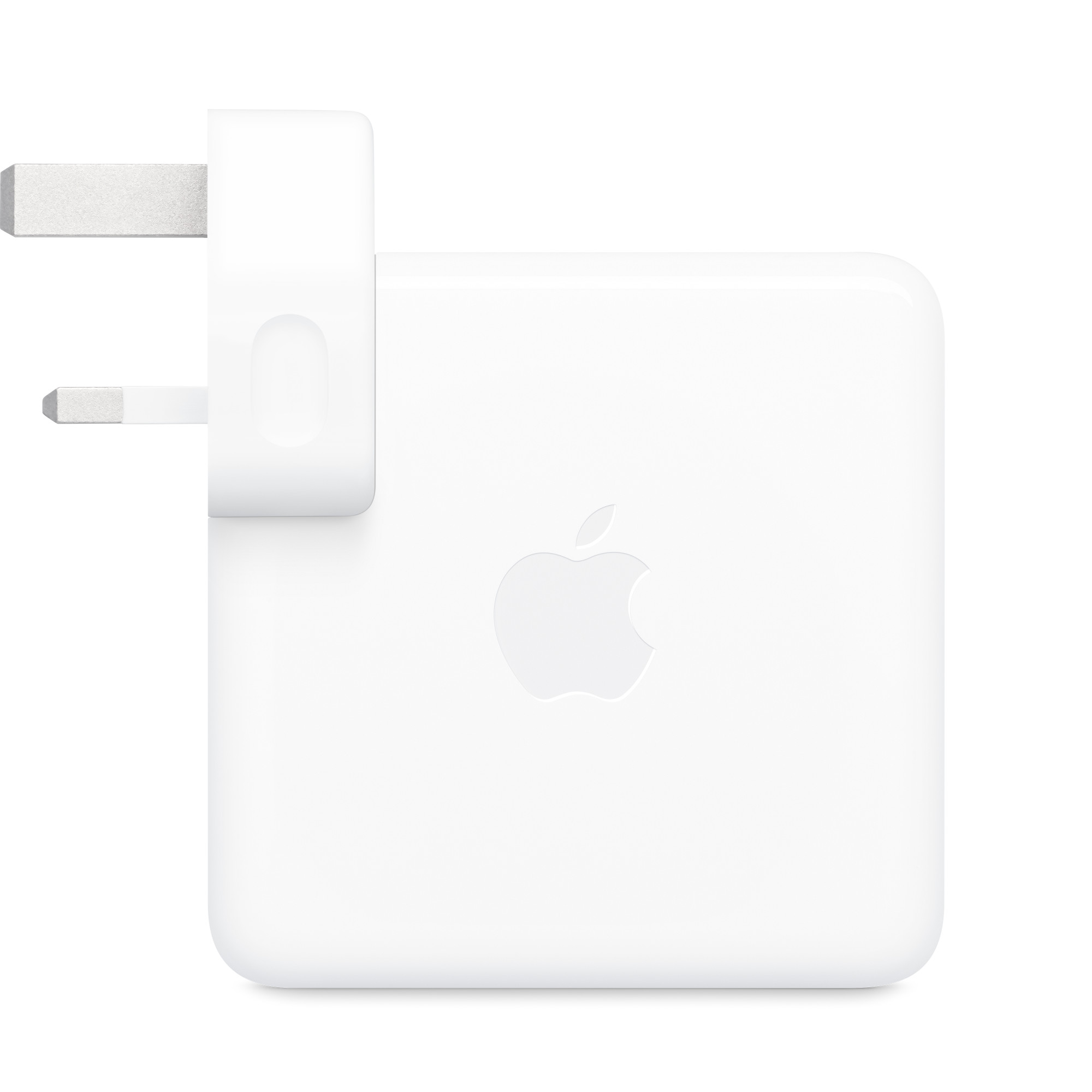
The amp rating on a USB-C cable is not a quality score. 3A and 5A are two tiers of the same standard, separated by a chip that must be present for the higher one to work at all. 6.5A is not a third tier — it is a different charging system with a different electrical philosophy, useful only inside the OPPO ecosystem it was built for. Buy 3A for phones and tablets. Buy 5A e-marked for any laptop charging above 60W. Buy 6.5A SUPERVOOC only for a matching OPPO, OnePlus or Realme phone and adapter. And remember the weakest of charger, cable and device sets the speed — so upgrading one while ignoring the others changes nothing.
Genuine USB-C cables with stated ratings — 3A, 5A e-marked, 240W EPR and SUPERVOOC 6.5A. Same-day dispatch before 15:00.
3A vs 5A Cable
E-Marker Chip
SUPERVOOC 6.5A
USB Power Delivery
Buyer Education
More from the Journal
Keep reading