 WhatsApp

Headphones
Wired vs Wireless: The Honest Answer Nobody Gives You
Wired vs Wireless:
The Honest Answer Nobody Gives You
Every comparison you’ve read was written by someone with something to sell you. We sell both. That’s exactly why we can tell you the truth — including the parts the wireless industry really doesn’t want you to know.
·
Buyer’s Guide
·
March 2026
8 min read
·
maibo.uk
physics doesn’t negotiate
lifespan before decline
asks you to manage
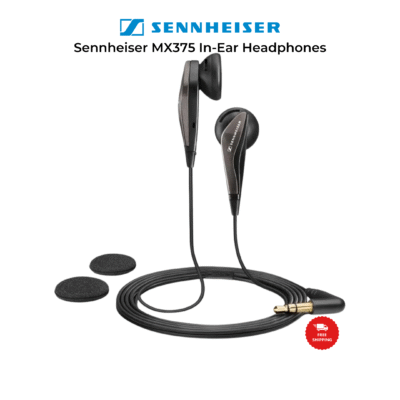
The wired versus wireless debate is one of the most reliably dishonest conversations in consumer electronics. Tech reviewers lean wireless because wireless products have better margins and bigger marketing budgets. Audio purists lean wired because they always have. Neither side actually tells you what matters for the way most people use earphones day to day.
We sell wired earphones and we sell wireless earphones. We have no financial reason to push you toward either. What we do have is fifteen years of handling both, watching what fails, and listening to what customers actually complain about. That experience is what this article is based on — not a spec sheet, not a brand partnership, not an affiliate link.
What Wireless Gets Right
Let’s be fair. Wireless earphones solved a real problem. The cable on wired earphones catches on things, tangles in pockets, and creates a small but genuine irritation across thousands of uses. If you’re at the gym, running, cycling, or moving around a lot, the absence of a cable is a meaningful improvement to your day. That’s not marketing — it’s physics.
Modern Bluetooth codecs — aptX, AAC, LDAC — have also closed the audio quality gap significantly. At high price points, a well-engineered wireless earphone with a good codec sounds excellent. The compression that made early Bluetooth audio sound flat and lifeless is largely a solved problem above £80 in 2026.
Active Noise Cancellation, when properly implemented, does something wired earphones genuinely cannot. Passive isolation blocks ambient sound through physical seal. ANC cancels it electronically — including low-frequency noise like aircraft engines and train carriages that physical sealing barely touches. For frequent travellers especially, good ANC is worth real money.
What Wireless Gets Wrong — And Nobody Says Out Loud
Every wireless earphone has a battery. Every battery degrades. This is the conversation the wireless industry systematically avoids having with consumers, and it’s the most important thing to understand before you spend serious money on wireless audio.
A new wireless earphone rated for 8 hours of playback will deliver roughly 6–7 hours at normal volume in real conditions. After two years of daily charging cycles, that figure drops — typically to 4–5 hours. After three years, you may be looking at 3 hours or less. The earphone hasn’t broken. The audio quality hasn’t changed. But the battery that was a selling point is now a daily irritation.
For most true wireless earphones, the battery is not replaceable. The product has a built-in expiry date. You’re not buying earphones — you’re leasing them for roughly three years before the battery degradation becomes too inconvenient to ignore. A wired earphone with a quality cable has no equivalent failure mode. It either works or the cable fails mechanically — and a good cable doesn’t fail for years.
You are not buying wireless earphones. You are leasing them for about three years. The battery is not a feature — it’s a countdown timer built into the product.
The Budget Problem Nobody Acknowledges
At higher price points — £100 and above — wireless earphones make a compelling case. The codecs are good, the ANC is real, the build quality justifies the cost. Below £50, the picture is very different.
Budget wireless earphones cut corners in a specific order: Bluetooth chipset first, battery quality second, driver last. The result is a product that pairs inconsistently, drops connection in certain environments, delivers compressed audio through a mediocre codec, and has a battery that will degrade faster than a premium unit because the cells are cheaper.
A £15 wired earphone from a reputable brand does none of those things. The audio path is a copper wire. It doesn’t drop connection. It doesn’t need pairing. It doesn’t have a codec. The audio quality ceiling at £15 wired is meaningfully higher than the audio quality ceiling at £15 wireless — not because wired is inherently better, but because wireless technology at £15 leaves almost nothing in the budget for the parts that actually matter.
·
maibo.uk
Six Scenarios — And the Honest Answer for Each
Wired wins at budget. Wireless wins above £80. For commuting under £30, a wired earphone with proper passive isolation beats a budget wireless option every time — no connection drops in tunnels, no pairing failures at 7am, no battery anxiety on a long journey. If you can spend £100+, quality ANC wireless earphones genuinely earn their keep on a noisy commute.
Wireless wins. This is wireless’s strongest use case and it earns it. A cable catching on gym equipment, bouncing during a run, or getting soaked in sweat is a genuine problem. An IPX-rated wireless earphone with a secure fit removes all of that. At the gym, the cable is the product’s worst feature — removing it is worth almost any audio trade-off.
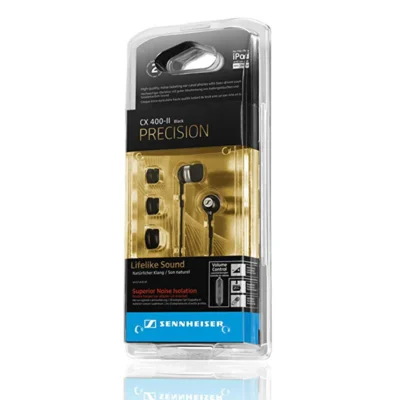
Wired wins. If you’re sitting at a desk, the cable is irrelevant. What matters is comfort over 6–8 hours and call quality. Wired earphones with inline mics — the CX 400 II is the example we’d give — deliver cleaner call audio than most budget wireless options, never run out of battery mid-meeting, and don’t need to be charged the night before.
Wireless ANC wins — if you can afford proper ANC. Budget wireless on a 10-hour flight is worse than wired. But genuine ANC from a quality brand on a long flight is one of the genuinely transformative audio experiences. The low-frequency engine noise that passive isolation barely touches gets eliminated. Worth every penny at this specific use case.
Wired wins. No contest. Under £25, wired earphones from established brands deliver audio quality that no wireless product in the same price bracket can match. A Sennheiser CX 300 II at £12–15 sounds better, lasts longer, and needs less management than any true wireless earphone at the same price. If budget is the constraint, wired is the honest answer.
Wired wins on latency. Always. Even the best low-latency Bluetooth codecs introduce 20–40ms of delay. For competitive gaming this is felt, not imagined — footsteps, reload sounds, and spatial cues are all slightly behind what’s on screen. For mobile casual gaming it doesn’t matter. For serious console or PC gaming, wired is the professional standard for a reason.
Under £30 budget: Buy wired. The audio quality gap is real and significant.
Active / gym use: Buy wireless. The cable is genuinely a problem worth solving.
Desk work / all-day calls: Buy wired. Battery anxiety is not a feature.
Travel with serious ANC: Buy wireless — but spend properly, £80 minimum.
Gaming: Buy wired. Physics beats marketing every time.
The Question You Should Actually Be Asking
Stop asking “wired or wireless?” Start asking “what is this product’s failure mode, and when does it happen?” A wired earphone’s failure mode is a mechanical cable issue — predictable, gradual, fixable with replacement. A wireless earphone’s failure mode is battery degradation — invisible until it’s inconvenient, and for most products, terminal.
The wireless industry has done an exceptional job of making cable-free feel like progress. In many contexts it is. But “progress” doesn’t mean “better for your situation.” It means better for their revenue cycle — because a product with a built-in expiry date sells replacements. A wired earphone that lasts five years does not.
We sell both. We’re not telling you wireless is bad. We’re telling you to go in with accurate information, decide based on how you actually use earphones, and not spend money on a technology answer to a problem you don’t have.
·
maibo.uk
Wireless is better at being wireless. Wired is better at being audio. The right answer depends entirely on what problem you’re actually trying to solve — and most people don’t have the cable problem that wireless was designed to fix. Buy accordingly.
Shop Both — Decide for Yourself
Genuine UK stock across wired and wireless. No pressure, no upsell — just the right product for the way you actually listen.
Earphones UK
Buyer’s Guide
Bluetooth Audio
Sennheiser
Audio Advice
2026
