 WhatsApp

Insider
Why an OPPO Charger Won’t Fast-Charge a Xiaomi
Why an OPPO Charger Won’t Fast-Charge a Xiaomi —
And Why the Cable Decides Half the Answer
Fast charging compatibility comes down to language: every charger is fluent in its own brand’s and only passable in everyone else’s. Plug an OPPO phone into a Xiaomi brick, or the other way round, and both sides quietly fall back to the one dialect they share — at a fraction of the speed printed on the box.
pushing current, not voltage
by raising the voltage
charger offers other phones
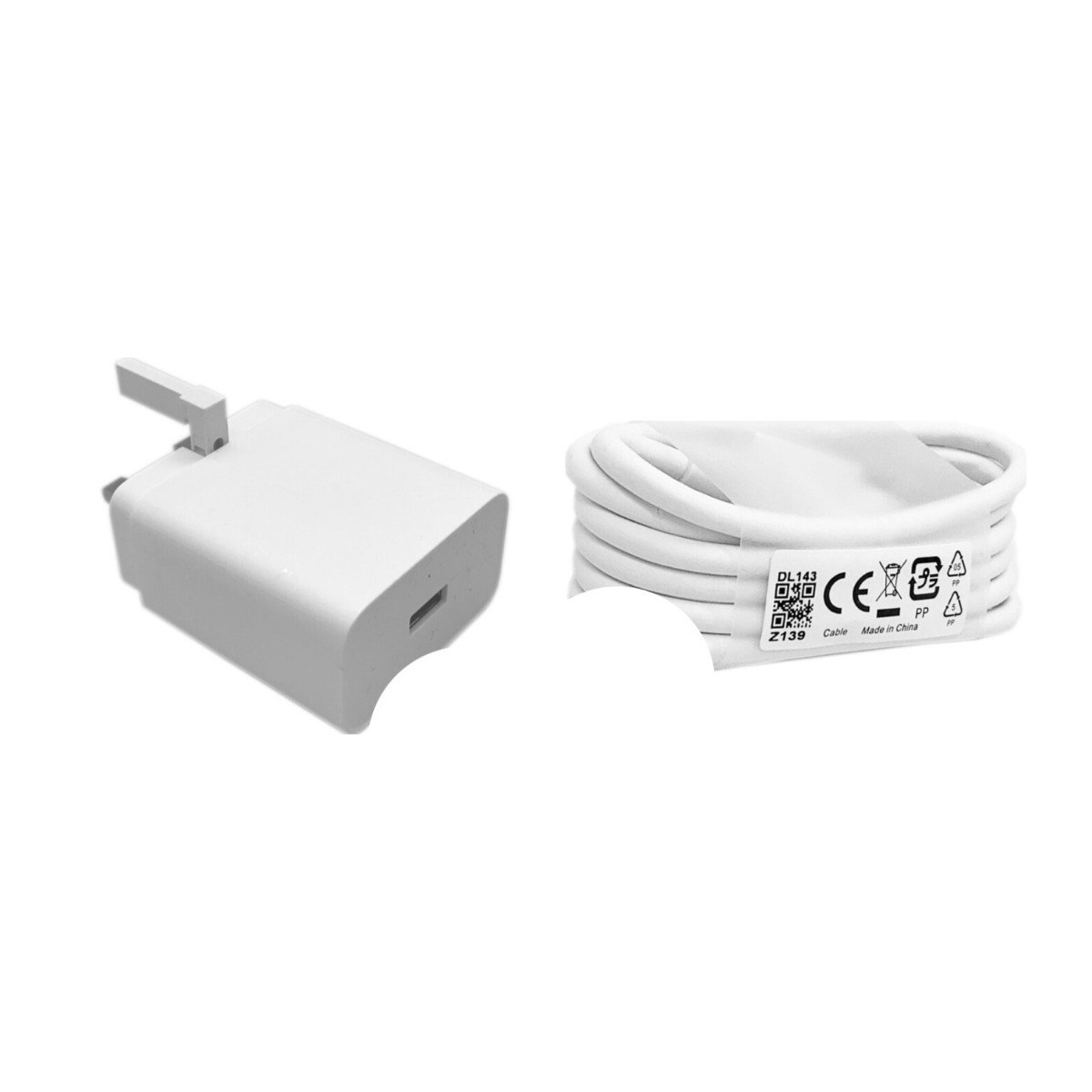
One of the questions we are asked most often goes roughly like this: the charger fills an OPPO phone in under an hour, but a Xiaomi plugged into the same charger crawls. The charger is genuine, the cable is genuine, both phones advertise fast charging, and nothing is faulty. The answer is that fast charging compatibility is not decided by the plug. It is decided by a conversation between phone and charger, and the two brands speak different languages.
This explainer covers why that conversation fails across brands, why OPPO and Xiaomi in particular took opposite engineering routes to their headline numbers, what speed you actually get when you mix them, and the one standard that does work the same way everywhere.
Fast Charging Compatibility Starts With a Handshake
When you plug a phone in, the charger does not simply push its maximum power down the wire. It starts at a safe 5 volts, and the phone and charger then negotiate. Each side announces which charging protocols it understands; if they find one in common, they agree on a voltage and a current and step up to it. If the charger is offering a protocol the phone does not recognise, that offer is simply ignored.
Brand fast-charging systems — OPPO’s SUPERVOOC, Xiaomi’s HyperCharge, Huawei’s SuperCharge — are proprietary protocols layered on top of USB-C. Each brand’s phones check for their own charger, and often their own cable, before unlocking the top speed. When the check fails, both devices fall back to the common ground they share, which is almost always USB Power Delivery. Nothing breaks. The phone charges. It just charges at whatever the shared protocol allows, which can be a small fraction of the headline figure.
Two Brands, Two Opposite Engineering Choices
Power is voltage multiplied by current. To reach a big number you can raise either one, and the two biggest Chinese fast-charging systems chose differently. That choice is the deeper reason their chargers and cables do not mix well.
OPPO SUPERVOOC raises current. It keeps the voltage low and pushes an unusually large current, and it moves much of the heat-generating conversion circuitry out of the phone and into the charging brick. Phones built for it also split the battery into two cells in series so each cell can take the charge comfortably. An 80W SUPERVOOC GaN charger that ChargerLab took apart is labelled 11V at 7.3A — about 80W at a voltage barely above a laptop’s lowest setting. Pushing that much current demands a thick, purpose-built cable, which is why genuine SUPERVOOC leads are rated far beyond the usual 3A or 5A: the ones we stock run from 8A to 13.7A. Our OPPO SUPERVOOC 80W UK charger and the 8A SUPERVOOC USB-A to USB-C cable are designed as exactly that kind of pair.
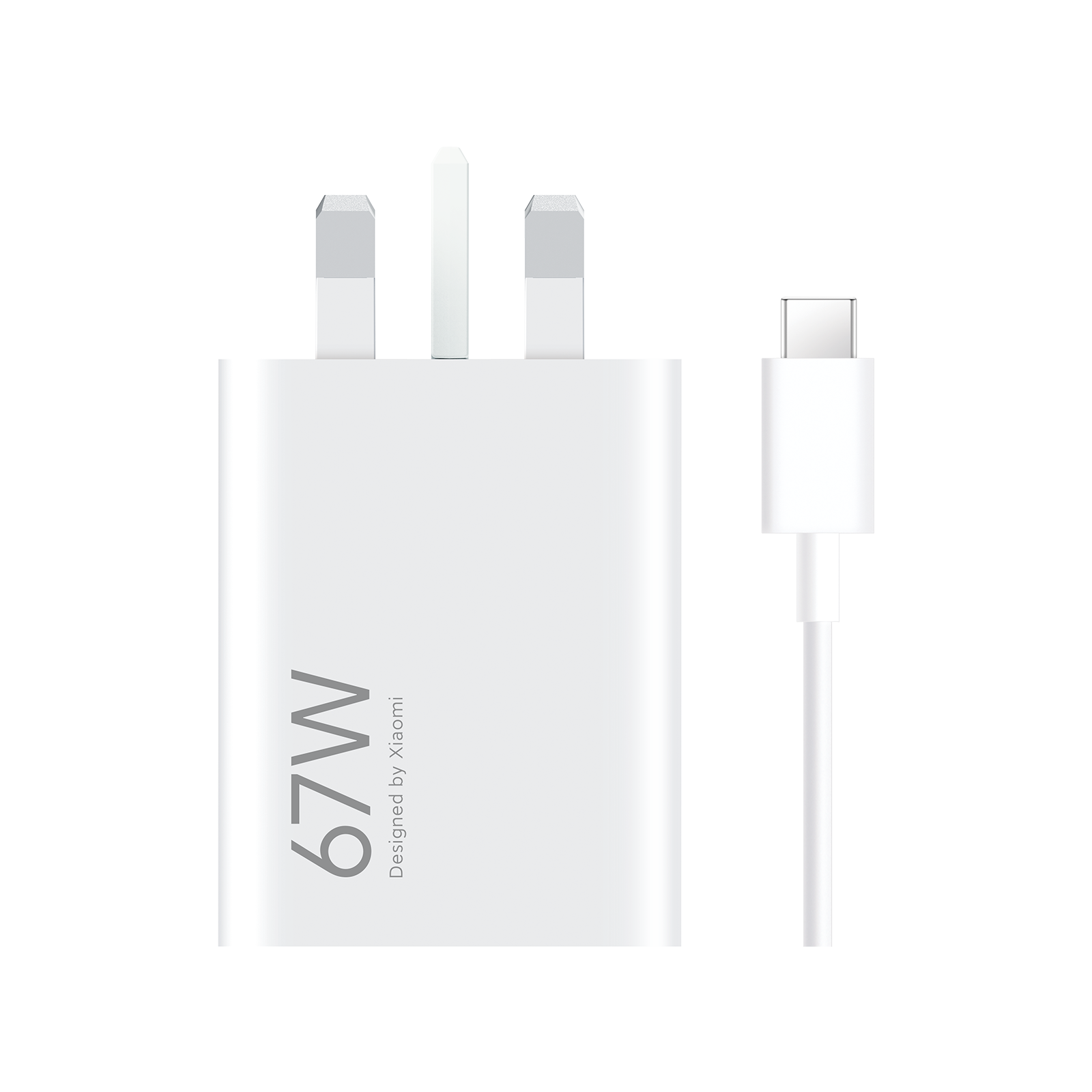
Xiaomi HyperCharge raises voltage. Xiaomi’s 120W profile runs at up to 20V and 6A. Higher voltage means less current for the same power, so the cable carries a lighter load, but it still has to be rated for 6A — on a standard 5A USB-C cable, Xiaomi’s own documentation of the protocol caps the result at 100W. The Xiaomi 67W HyperCharge combo ships with its matching cable for this reason, and a separate Xiaomi 6A USB-A to USB-C cable is the like-for-like replacement when the original goes missing.
Put those together and the incompatibility stops looking arbitrary. A SUPERVOOC charger is built to deliver huge current at 11V; a HyperCharge phone is built to request high voltage. Even with goodwill on both sides, the profiles do not line up — and neither brand has any commercial reason to make its premium speed available to the other’s phones.
“A fast charger is fluent in one brand’s language. With everyone else, it falls back to the phrasebook.”
— Susan Deckheart, Maibo
What Actually Happens When You Swap Them
These are the combinations people actually end up with in a shared house. Where a measured figure exists, it is given; where it varies by model, we say so rather than guess.
- 1
OPPO or OnePlus phone, SUPERVOOC charger, SUPERVOOC cable
Full SUPERVOOC speed, up to the lower of the phone’s and the charger’s rating. This is the only combination that delivers the number on the box.
- 2
Same phone and charger, ordinary USB-C cable
It charges, but significantly slower. The charger is willing; the cable cannot carry the current SUPERVOOC relies on. This is the most common reason an OPPO owner thinks a genuine charger has failed.
- 3
OPPO or OnePlus phone on a Xiaomi or generic USB-C charger
The phone falls back to USB Power Delivery, and on these phones PD has historically been capped low — Android Authority puts it at 18W or 27W on OPPO and OnePlus models, even though PD itself can go much higher. Newer models vary, so check the phone’s specification sheet for its PD figure.
- 4
Xiaomi phone on a generic USB PD charger
Better than the OPPO case. Independent protocol testing puts HyperCharge phones at close to 50W on a standard PD or PPS charger — useful, but well short of 120W.
- 5
Xiaomi phone on the OPPO 80W charger
The two meet on USB PD. The 80W OPPO charger ChargerLab tested offers fixed PD steps up to 15V at 3A — 45W at most to any non-OPPO phone. That 80W figure is reserved for SUPERVOOC.
- 6
Any other phone on a Xiaomi charger
Xiaomi states plainly that other brands’ phones cannot receive the higher power its own phones get from the 120W combo. Those phones are served over Quick Charge or USB PD instead, at the speed that protocol and the phone allow.
Why Nobody Has Fixed It
There is an attempt. China’s Universal Fast Charging Specification, UFCS, was created to fix fast charging compatibility between brands, so chargers from one brand would charge another’s phones properly. In May 2025 Huawei, Honor, OPPO and vivo jointly adopted UFCS 2.0, which guarantees 40W between participating devices without any brand authentication. Xiaomi was not named among the adopters, and the reporting at the time described it as uncertain whether UFCS would expand beyond China at all. For UK buyers, it is not yet something to shop by.
The commercial logic is not hard to see. A proprietary protocol is a reason to buy the brand’s own charger, and the dual-cell batteries and in-brick conversion that make these speeds possible are real engineering, not marketing. Even UFCS’s shared 40W tier sits well below the 80W and 120W headlines, so each brand keeps its top speed for itself either way.
The Standard That Does Work Everywhere
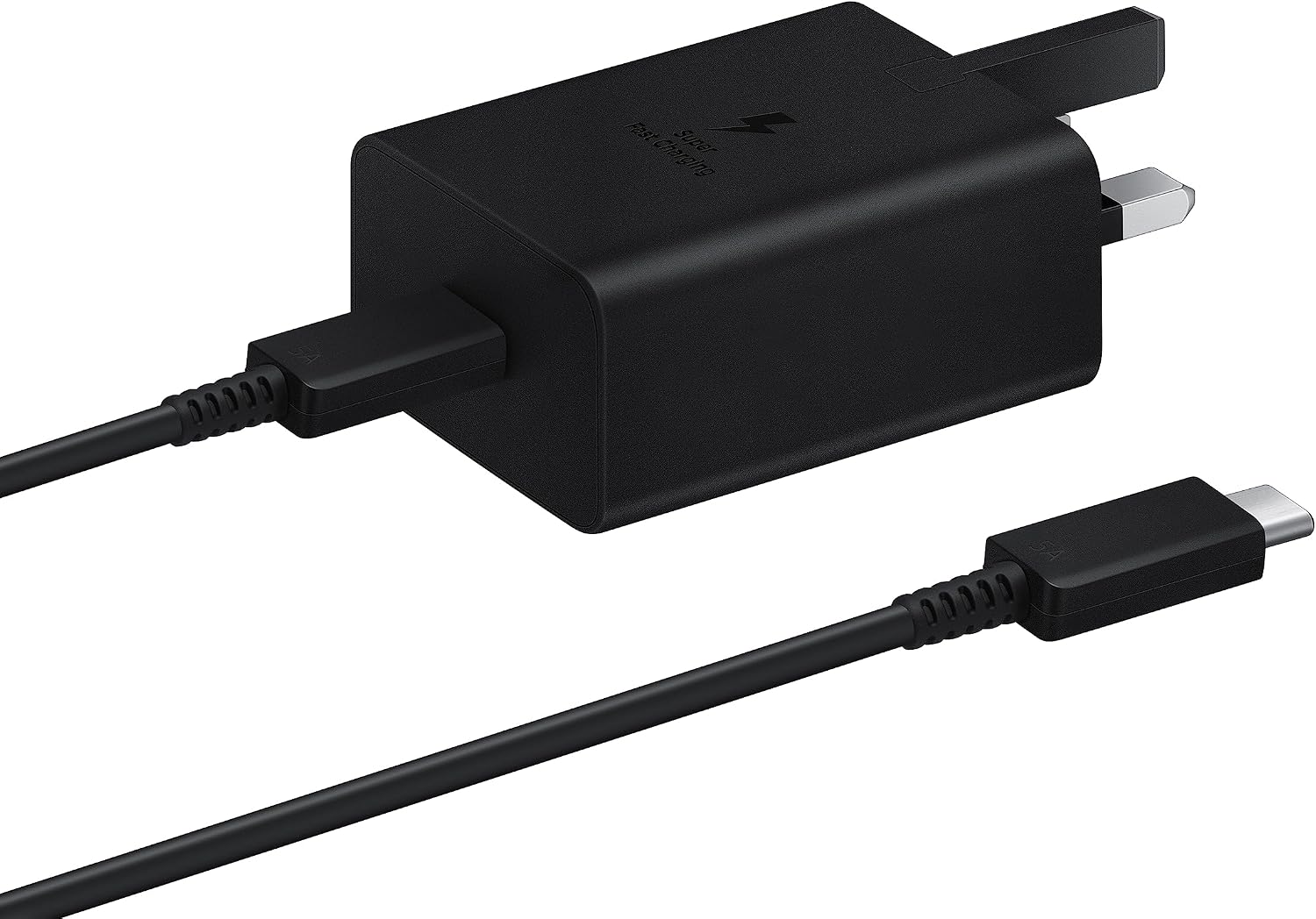
USB Power Delivery, and its variable-voltage extension PPS, is the open standard every brand above falls back to. For fast charging compatibility across brands, it is the only thing that reliably works. A few manufacturers build their fast charging on it outright rather than on a private protocol, and their phones charge at full speed from any compliant charger. Samsung’s Super Fast Charging is the clearest case: it runs on PD with PPS, so the Samsung 45W Super Fast Charger 2.0 is fast for a Galaxy, and any good 45W PPS charger would be too. The limit is the cable — the 45W tier needs one rated for 5A, which is why a 240W-rated USB-C cable is a safe universal choice. We cover what those amp ratings mean in our guide to 3A, 5A and 6.5A USB-C cables.
The trade-off is speed for universality. PD will never give a OnePlus its 100W or a Xiaomi its 120W. But a PD charger gives every phone in the house a respectable charge, and it never surprises anyone.
Keep each brand’s pair together. The SUPERVOOC brick and its cable, or the HyperCharge brick and its 6A cable, belong to the phone that needs top speed.
Never separate a proprietary cable from its charger. A SUPERVOOC lead and a Xiaomi 6A lead both fit any USB port, and neither will do the other’s job.
Buy the shared charger on USB PD. A PD or PPS charger with a 5A cable gives everyone a sensible speed and nobody the maximum.
Huawei works the same way. SuperCharge needs a Huawei brick, such as our Huawei 90W SuperCharge UK charger, and its own 6A cable.
A slow charge on the wrong charger is not a fault. It is the fallback doing exactly its job.
An OPPO charger and a Xiaomi phone are not incompatible in the sense of being unsafe — they simply share no language beyond USB Power Delivery, and OPPO’s current-heavy design and Xiaomi’s voltage-heavy one were never meant to meet. The top speed on any box is a promise about one specific phone, one specific charger and one specific cable. Buy each brand’s charger and cable as a pair for the phone that needs top speed, and buy a USB PD charger for everything else. Treat a cable as part of the charger, not as an accessory to it.
Genuine OPPO, OnePlus, Xiaomi, Huawei and Samsung chargers — each with the cable it was designed for. Same-day dispatch before 15:00.
SUPERVOOC
Xiaomi HyperCharge
USB PD
Charging Cables
Buyer Education
More from the Journal
Keep reading