 WhatsApp

Insider
Gaming Headsets in 2026: The Specs That Decide Your Audio
Gaming Headsets in 2026: The Specs That Decide Your Audio —
And the Ones Marketing Made Up
Driver size in millimetres. Virtual 7.1 surround. RGB lighting. Three of the most prominently advertised gaming headset features, and none of them tells you much about how the headset will actually perform. Here’s what the measurable specifications say — and which ones genuinely change what you hear in a match.
threshold for lag
latency in 2026
unusable for FPS
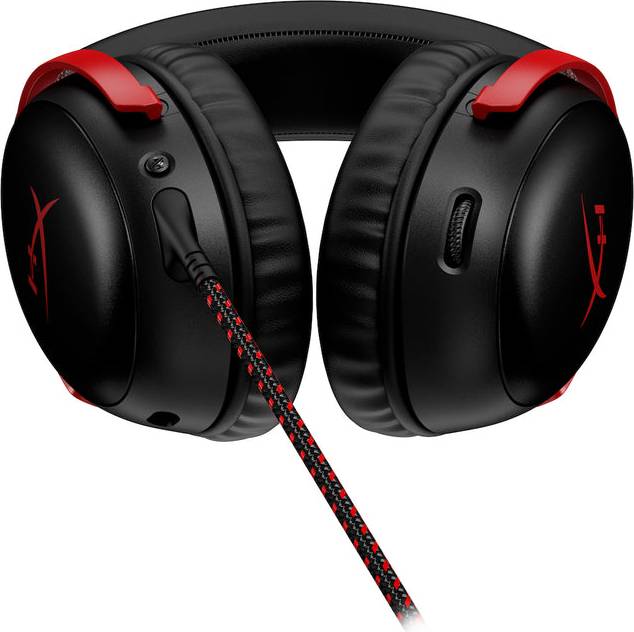
Gaming headset marketing has settled into a stable pattern. The box lists driver diameter in millimetres, advertises virtual 7.1 surround sound, mentions the RGB lighting, and quotes a frequency response range that spans further than human hearing. All four of these are technically true statements. None of them predicts whether the headset will let a player hear footsteps behind them in a competitive match, or whether their voice will be intelligible to teammates.
The specifications that genuinely determine gaming headset performance are less marketable, which is precisely why they appear in smaller print or not at all. Latency figures depend on connection architecture rather than brand. Positional accuracy comes from driver tuning, not from the number of virtual channels a software layer claims to produce. Microphone intelligibility depends on the pickup pattern and physical placement, not on whether the signal travels through a cable.
What follows is a breakdown of both sets — the specifications that measurably change what a player experiences, and the ones that exist primarily to fill a box. The distinction has become sharper in 2026 because the underlying technology has changed enough to invalidate advice that was accurate three years ago.
Latency: The Argument That Has Largely Been Settled
For most of the last decade, the wired-versus-wireless question in gaming had a straightforward answer: wired, because wireless introduced audible delay. That answer is no longer accurate for the majority of players, and the reason is a specific technical shift worth understanding.
There are three distinct connection types, and they perform very differently. A wired analogue connection through a 3.5mm jack carries essentially no transmission latency — under 5ms in measured tests, effectively instantaneous. Dedicated 2.4GHz wireless, using a USB dongle rather than Bluetooth, now measures between 10 and 25ms in 2026 hardware. Standard Bluetooth, by contrast, ranges from 40 to 250ms depending on codec and device.
The number that matters for interpreting these figures is the human perception threshold for audio-visual desynchronisation, which sits around 30ms for most listeners. Below that threshold, the delay is not consciously detectable. This places 2.4GHz wireless below the perception boundary and Bluetooth well above it. The practical consequence: for the overwhelming majority of players, a 2.4GHz wireless headset is functionally indistinguishable from wired during gameplay. Bluetooth is not, and should not be used for competitive play.
Where wired retains a genuine advantage is consistency rather than raw speed. A cable delivers the same latency in every environment. Wireless performance can degrade with radio interference, distance, or a low battery, and while the average is excellent, the worst case is less predictable. This is why tournament organisers continue to specify wired connections — not because the average wireless latency is unacceptable, but because competitive integrity requires eliminating variables entirely.
“The distinction that matters in 2026 is not wired versus wireless. It is 2.4GHz versus Bluetooth — and a great many headsets marketed for gaming are Bluetooth.”
— Andrew Dorce, Maibo
Where the Money Goes Inside the Headset
A useful way to evaluate any gaming headset is to consider how its price is allocated internally. Every headset has a bill of materials, and the components compete for the same budget.
A wired headset spends its entire component budget on drivers, acoustic chamber design, headband and ear cup materials, and the microphone. A wireless headset at the same retail price must additionally fund a wireless transmitter chip, a receiver dongle, a lithium battery, charging circuitry, and the power management required to keep all of it running. That hardware has a real cost, and it is subtracted from the acoustic budget.
At premium price points this matters less, because the total budget is large enough to fund both good acoustics and good wireless hardware. At budget and mid-range price points it matters considerably. A £45 wired headset and a £45 wireless headset are not comparable products — the wired model has meaningfully more of its cost invested in what the player actually hears. For buyers with a fixed budget under roughly £60, wired reliably delivers better audio and microphone quality than wireless at the same price.
Five Specifications That Genuinely Change Performance
- 1Connection type — 2.4GHz, Bluetooth, or analogue
This is the single most consequential specification and the one most often obscured. Many headsets marketed as “wireless gaming headsets” connect over Bluetooth, which carries latency far above the perception threshold. A dedicated 2.4GHz dongle is a different technology entirely. Before buying any wireless gaming headset, verify which of the two it uses. Some support both, and the distinction determines whether the headset is suitable for competitive play or only for casual listening.
- 2Microphone design and placement, not connection
Microphone quality is determined by the physical design of the microphone itself — a detachable or fixed boom arm that positions the capsule near the mouth will outperform an inline microphone on a cable regardless of whether the headset is wired or wireless. A cardioid or unidirectional pickup pattern rejects background noise from the room; an omnidirectional pattern does not. For anyone playing team games or streaming, boom placement and pickup pattern matter far more than any other microphone specification.
- 3Clamping force and weight distribution
Rarely quoted as a number, and arguably the specification with the greatest effect on the actual experience. A headset with excellent drivers and excessive clamping force becomes uncomfortable within an hour, and a headset that is uncomfortable does not get used. Weight distribution across the headband, ear cup padding depth, and clamping pressure determine whether a headset is viable for a four-hour session. Reviews mentioning comfort over extended sessions are more informative here than any manufacturer specification.
- 4Driver tuning, not driver diameter
Driver diameter in millimetres is prominently advertised and weakly correlated with quality. A well-engineered 40mm driver outperforms a poorly-tuned 53mm one. What matters acoustically is the tuning — whether the frequency response emphasises the mid and upper-mid range where footsteps, reloads, and directional cues sit, or whether it is tuned for heavy bass that masks exactly those cues. Bass-forward tuning sounds impressive in a shop demonstration and actively hurts competitive performance by burying the quiet high-frequency information players need.
- 5Platform compatibility for the specific console
Console compatibility is not universal and is a common source of post-purchase disappointment. Xbox in particular has historically required specific wireless protocols that many PC-oriented headsets do not support, while PlayStation and PC handle standard USB dongles more readily. A wired 3.5mm headset avoids the problem entirely by working with any controller that has a headphone jack. For anyone playing across multiple platforms, this consideration should come before audio specifications.
Three Specifications That Are Mostly Marketing
Virtual 7.1 surround sound. A gaming headset has two drivers, one per ear. It is physically incapable of producing seven discrete channels. What “virtual 7.1” describes is a software process that applies psychoacoustic filtering to simulate directionality across those two drivers. This can work reasonably well when the underlying implementation is good, and it produces a hollow, artificial sound when it is not. Critically, positional accuracy in a well-tuned stereo headset is frequently better than in a poorly-implemented virtual surround mode — which is why a substantial number of competitive players disable virtual surround entirely. The feature is not fraudulent, but it is a software layer, not a hardware capability, and its presence on a box says little about performance.
Extended frequency response figures. Human hearing spans roughly 20Hz to 20kHz, and the upper limit declines with age. A headset advertising a response of 10Hz to 40kHz is quoting a range mostly outside audibility. The figure also says nothing about how flat or accurate the response is within the audible band, which is what actually determines sound quality. A frequency range specification without a corresponding response curve is close to meaningless as a comparison tool.
RGB lighting. Worth stating plainly because it occupies genuine space in marketing material and on the bill of materials. Lighting has no acoustic function, consumes battery on wireless models, and adds cost that could have been spent on drivers or padding. For a player who values the aesthetic, that is a legitimate personal preference. As a purchasing criterion for audio performance, it is not a factor.
Competitive players are listening for quiet, high-frequency, directional information — footsteps, reloads, equipment sounds — against a loud background of gunfire and music. A headset tuned with heavy bass emphasis masks precisely this information, because low-frequency energy psychoacoustically obscures quieter high-frequency detail. This is the reason a headset can sound impressive playing music and perform poorly in a match. When evaluating a gaming headset, the relevant question is not whether it sounds full and powerful, but whether quiet details remain audible when the mix gets loud. Reviews from competitive players are more useful here than general audio reviews, because they are testing for the opposite quality to what most listeners want from music.
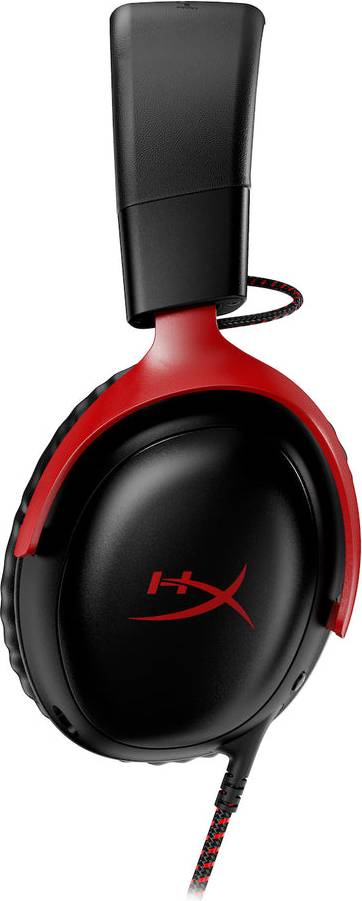
The wired-versus-wireless debate has largely resolved: 2.4GHz wireless is imperceptibly different from wired for gameplay, Bluetooth remains unsuitable for competitive play, and wired retains an edge in consistency and in budget-tier value. Under roughly £60, wired delivers measurably more audio and microphone quality per pound because none of the budget funds wireless hardware. Above that, the choice is genuinely about how you play — cable consistency for competitive sessions, wireless freedom for long casual ones. What does not vary is which specifications to check: connection protocol, microphone design, clamping force, and driver tuning. Ignore the surround channel count and the millimetre figure on the box.
Genuine gaming headsets and peripherals — same-day dispatch before 15:00.
Wired vs Wireless Gaming
Gaming Headset Latency
HyperX Cloud III
Positional Audio
Buyer Education
More from the Journal
Keep reading