 WhatsApp

Headphones
Beats vs Sennheiser: What 20 Years of Selling Both Taught Me
Beats vs Sennheiser:
What 20 Years of Selling Both Taught Me
We’ve sold Beats. We’ve sold Sennheiser. We’ve watched both brands evolve, pivot, and occasionally disappoint their most loyal customers. This isn’t a spec comparison — it’s what two decades of actually moving units taught us about what these brands are really selling, and who should buy which one.
·
Product Authority
·
March 2026
8 min read

·
maibo.uk
audio engineering heritage
culture and marketing
no brand loyalty here
Let me be clear about something before we start: I have no reason to favour either brand. We sell both. We make margin on both. Our job is to match the right product to the right buyer, and doing that well means being honest about what each brand actually is rather than what its marketing says it is.
Most Beats vs Sennheiser comparisons are written by people who tested two products for a week and have a referral link at the bottom. This one is written by someone who has sourced both brands across Asia and Europe for twenty years, watched their strategies change, and sold thousands of units of each. The perspective is different. The conclusions might surprise you.
What Beats Actually Is — And Why That’s Not an Insult
Beats was founded in 2006 by Dr. Dre and Jimmy Iovine. It was acquired by Apple in 2014 for $3 billion. That sale price tells you everything you need to know about what Beats actually is: it is a cultural brand that happens to make audio products, not an audio company that happens to be culturally relevant. The distinction matters enormously.
Early Beats products were genuinely criticised by audiophiles for emphasising low-end bass over accuracy. That criticism was correct — and largely irrelevant. Beats was never targeting audiophiles. It was targeting people who wanted to be seen wearing a particular piece of cultural signalling around their neck. The product worked because the brand worked. The bass-heavy tuning wasn’t an accident or a failure — it was a deliberate choice made for a specific audience who wanted to feel the music more than analyse it.
Post-Apple, the engineering improved significantly. The Beats Fit Pro, the Studio Buds, and the more recent wireless lineup are genuinely competitive products at their price points — not just badge purchases. Apple’s chip integration gives Beats devices a seamless pairing experience on Apple hardware that no competitor at the price can match. If you’re in the Apple ecosystem and you want wireless earbuds that work effortlessly with your phone, MacBook, and iPad simultaneously, Beats is a rational choice, not just a status purchase.
Beats sells confidence. Sennheiser sells competence. Both are legitimate things to buy — the mistake is buying one when you actually need the other.
What Sennheiser Actually Is — And Why It Keeps Disappointing Its Own Fans
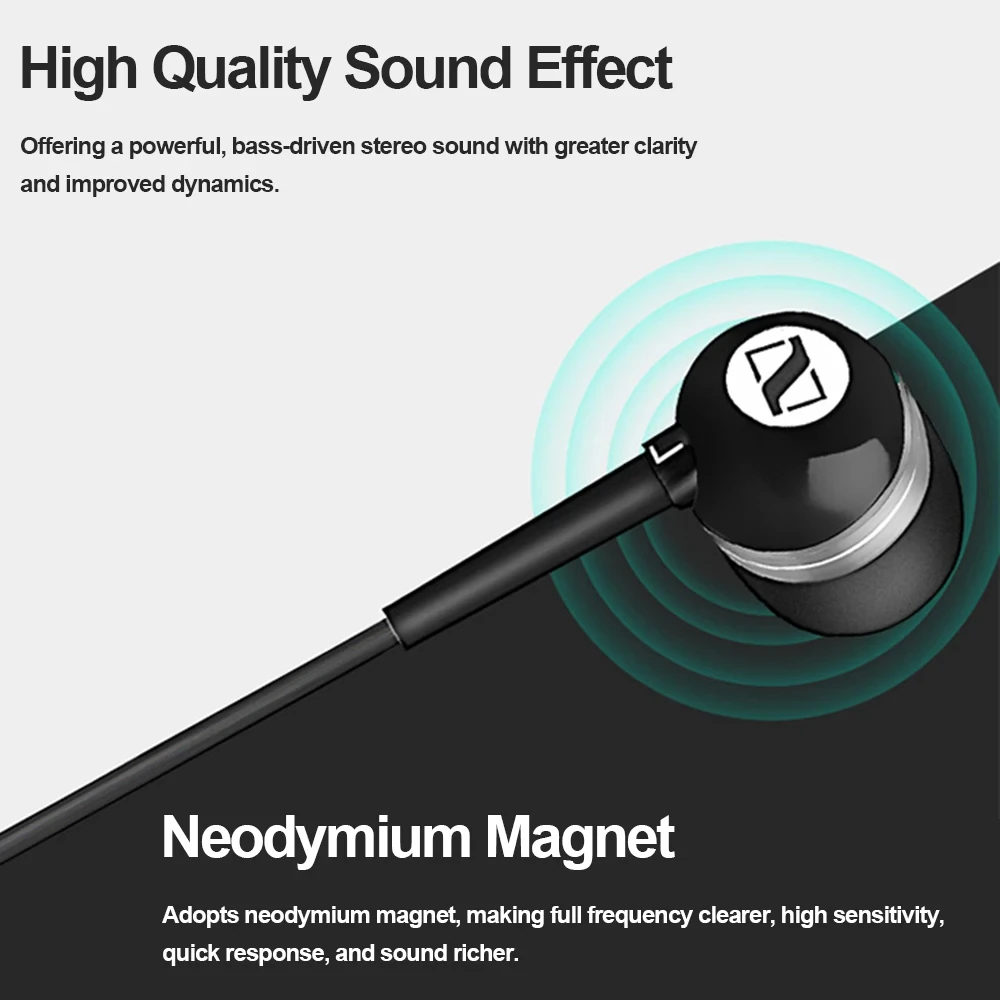
Sennheiser was founded in 1945 in Germany. It built its reputation on engineering rigour — microphones, broadcast headphones, studio monitors. The consumer division inherited that DNA. When Sennheiser made a budget earphone in 2009, they made it properly: correct driver size, correct cable construction, correct acoustic tuning. The CX 300 II wasn’t trying to be fashionable. It was trying to be right.
That engineering instinct is Sennheiser’s greatest strength and, commercially, its greatest weakness. Products that are genuinely good don’t need replacing. A customer who buys a Sennheiser CX 300 II and uses it daily for three years doesn’t need to buy another earphone for three years. That is excellent value for the consumer and a challenging business model for the brand.
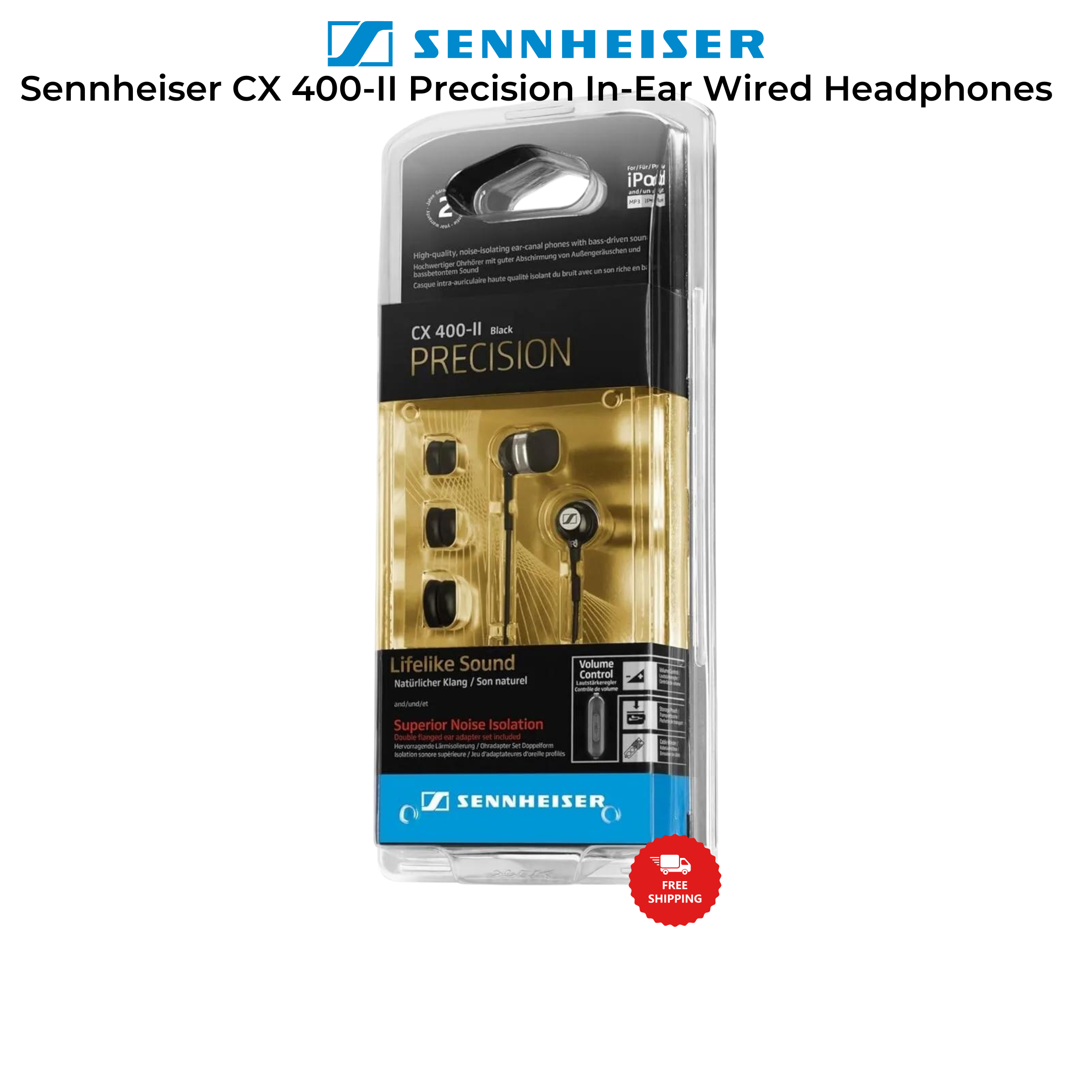
The result has been a pattern we’ve watched repeat throughout our two decades selling the brand: Sennheiser makes a product that earns genuine loyalty, then discontinues it to force buyers toward a higher-margin successor, then watches their most loyal customers defect because the successor doesn’t deliver the same unadorned quality. The CX 300 II, CX 400 II, and MX 375 are all examples of this cycle. Excellent products, quietly killed, never meaningfully replaced.
Head-to-Head: Six Dimensions That Actually Matter
Sennheiser: accurate, balanced, honest
Neither is objectively better — they’re tuned for different preferences. Beats sounds more exciting in a 30-second demo. Sennheiser sounds more right across 30 days of daily listening. If you’ve ever bought earphones that felt great in the shop and slightly fatiguing after a week, you experienced a Beats-style tuning. If you’ve ever bought earphones that felt underwhelming at first and became indispensable, you experienced a Sennheiser-style tuning.
Sennheiser: functional materials, exceptional durability
Beats products feel expensive because the external finish is premium — aluminium, gloss, satisfying clicks. Internal component quality has been inconsistent across the range. Sennheiser products feel utilitarian. The plastics are fine, not exciting. The cables on wired models are built to survive thousands of pocket insertions. Over three years of daily use, the Sennheiser will look and work the same. The Beats may still look fine but will likely have battery degradation issues.
Sennheiser: universal, no ecosystem advantage
This is where Beats earns its price premium without argument. The H1 and W1 chip integration means instant pairing, automatic device switching between your iPhone, iPad, and Mac, and Siri integration that actually works. If you use multiple Apple devices daily, this alone is worth the Beats premium over a comparable Sennheiser wireless product. If you’re on Android or use a single device, this advantage disappears entirely.
Sennheiser: genuine quality from £12
Under £30, there is no Beats product worth recommending. The brand doesn’t play in this space meaningfully and the products that carry the name at very low prices are not representative. Under £30, Sennheiser wins by default — the CX 300 II at £12–15 is one of the best pure audio products at any price, wired or wireless. If budget is your constraint, this isn’t a comparison: it’s a category.
Sennheiser: high on discontinued models
Both brands carry significant counterfeiting risk, but for different reasons. Beats counterfeits are ubiquitous because the brand recognition commands a premium — faking a £200 product and selling it for £80 is a viable criminal business. Sennheiser counterfeits concentrate on discontinued models where genuine supply has dried up. In both cases the fakes look convincing. In both cases the only protection is buying from verified sellers with trackable supply chains.
Sennheiser wired: consistent for product lifetime
Beats satisfaction at year one is typically high. At year three, the battery story starts — wireless models decline predictably. Sennheiser wired models don’t have this trajectory. The CX 300 II you buy today will sound identical in four years. That consistency is boring to talk about and extremely valuable to own. Customer returns on our Sennheiser wired stock are rare. Returns on wireless products — any brand — correlate strongly with battery performance over time.
·
maibo.uk
What 20 Years of Returns Data Actually Says
We track returns. Not obsessively, but we know our patterns. The data from two decades of selling both brands is consistent enough to be worth sharing.
Sennheiser wired returns are almost exclusively about fit — the product didn’t suit the buyer’s ear, or they wanted something different from what the listing described. Almost never about failure. Beats wireless returns cluster around two causes: fit issues in the first two weeks, and battery performance concerns after twelve to eighteen months of ownership. The latter category is the one that matters commercially — it’s the returns that generate the most friction and the most customer service conversation.
This doesn’t make Beats a bad product. It makes Beats a product with a predictable lifecycle, and buyers who understand that lifecycle tend to be more satisfied than those who don’t. Buy Beats knowing the battery will decline. Buy Sennheiser wired knowing it won’t. Both are rational choices when made with accurate expectations.
Do you use Apple devices exclusively? Beats wireless earns its premium.
Is your budget under £30? Sennheiser wired. Not even close.
Do you want the same product in 4 years? Sennheiser wired.
Do you want to look a certain way? Beats. And that’s a completely legitimate reason to buy.
The Honest Recommendation
If someone asks me which brand to buy without giving me any context, I ask them one question: are you buying earphones to listen to music, or to own something? Both are legitimate answers. Neither is embarrassing. But they lead to different products.
If you’re buying earphones to listen to music — to hear it accurately, to use them daily for years, to spend as little as possible for as much audio quality as the market can deliver — buy Sennheiser. Specifically: buy a discontinued wired model from our last UK stock before it’s gone.
If you’re buying earphones that integrate flawlessly with your Apple devices, that you can wear in a meeting without being self-conscious, and that provide wireless freedom at a price that reflects genuine engineering rather than just brand premium — buy Beats. Specifically: buy from a seller who can prove the units are genuine, because the counterfeit problem in this category is severe.
We stock both. We’re not pushing you toward either. What we are telling you is that the choice between these two brands is not about which one is better — it’s about which one is better for you. That requires honesty about what you actually need, which is the one thing most brand comparisons never ask you for.
·
maibo.uk
Beats sells confidence. Sennheiser sells competence. The best earphone is the one that matches what you’re actually buying it for — and most people, if they’re honest with themselves, are buying earphones to listen to music. That answer has a clear winner at every price point below £80.
We stock both brands. Both are verified genuine. Both ship from UK. The choice is yours — we’re just making sure you have the real thing.
Sennheiser
Headphone Comparison
Best Earphones UK
Audio Buying Guide
UK Stock
More from the Journal
Keep reading